
What Kind of Gas Does a Lawn Mower Take?
You should use fresh, unleaded gasoline with at least an 87 octane rating in your lawn mower for the best performance.
Ethanol blends up to 10% (E10) are generally fine, but higher blends can harm your engine.
Always avoid old or contaminated fuel and store it properly in airtight containers away from heat.
Taking these steps keeps your mower running strong and extends its life.
Keep going to uncover more helpful fuel tips and storage advice.
Recommended Fuel Types for Lawn Mowers
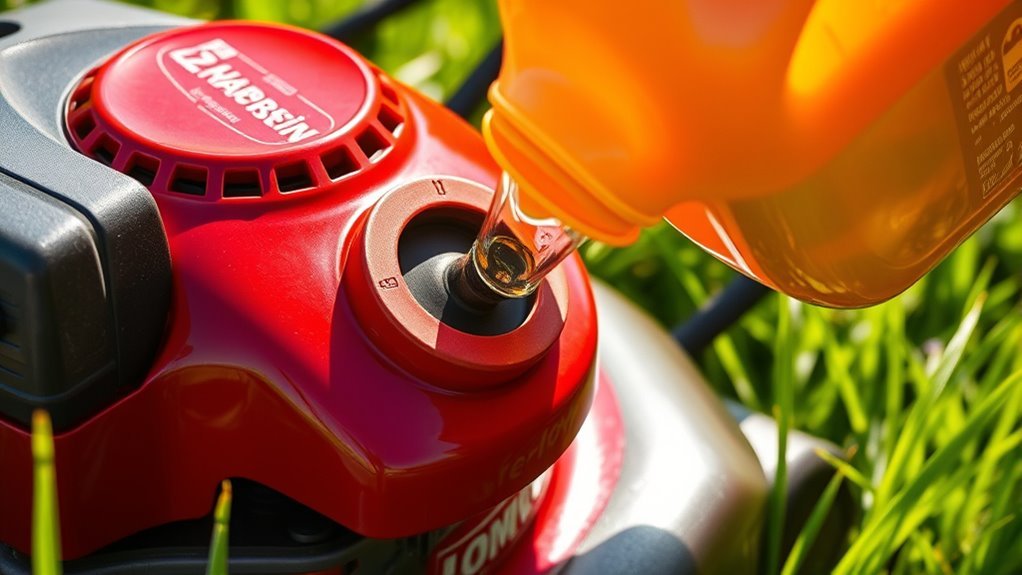
Although you might find various fuel options at the pump, most lawn mowers perform best on fresh, unleaded gasoline with at least an 87 AKI octane rating. Using good quality gasoline helps your lawn mower engines run smoothly and prevents engine damage.
Ethanol-blended fuels with up to 10% ethanol (E10) are usually acceptable, but pure gasoline or ethanol-free fuel is better for the longevity of small engines. Avoid higher ethanol blends like E15 or E85, as they can cause significant damage to these engines.
To maintain peak performance, always use fuel that’s fresh or treated with a fuel stabilizer if stored longer. Following the manufacturer’s fuel recommendations ensures your mower runs efficiently and lasts longer without costly repairs.
Proper Fuel Storage and Handling Practices
Choosing the right fuel is just one part of keeping your lawn mower running smoothly; how you store and handle that fuel also plays a big role. Proper handling and storage practices prevent damage to your mower’s fuel system and guarantee peak performance.
Proper fuel storage and handling are essential for maintaining your lawn mower’s performance and preventing fuel system damage.
Follow these tips:
- Use a fuel stabilizer when storing gasoline over 30 days to keep fuel fresh and minimize ethanol content effects.
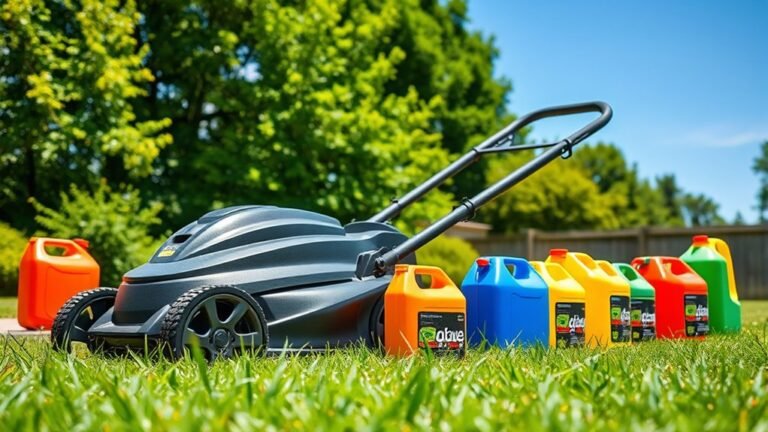
- Store gasoline in approved containers, airtight and clearly labeled, in a cool, dry, ventilated area away from heat sources.
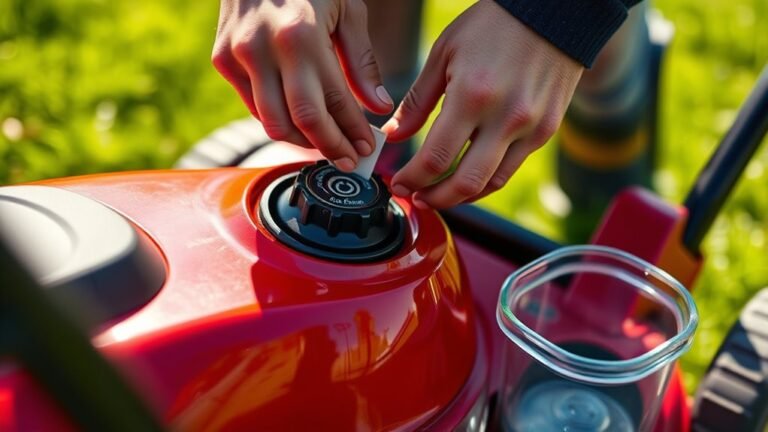
- Always fill the fuel tank with fresh, stabilized fuel before storage and run the engine briefly to circulate it.
- Drain fuel from the mower’s fuel tank and carburetor if storing for months to prevent gum and varnish buildup.
Stick to these gasoline storage and handling steps for a trouble-free season.
Conclusion
Now that you know the right fuel for your lawn mower, imagine the satisfying hum as it springs to life, cutting through the grass with ease.
Using the proper gas and storing it safely isn’t just smart—it’s the key to keeping your mower ready for every trim. So, before your next mow, take a moment to fuel up correctly.
Because the last thing you want is to be left stranded, staring at a silent machine on a perfect mowing day. Choosing the right kind of gas for your lawn mower ensures it runs smoothly and lasts longer.
Remember, using fresh gasoline with the correct octane rating and avoiding ethanol blends that can harm small engines will keep your mower in top shape. Proper fuel care and storage are essential for reliable performance every time you mow.