
How to Winterize Your Lawn Mower in 3 Easy Steps
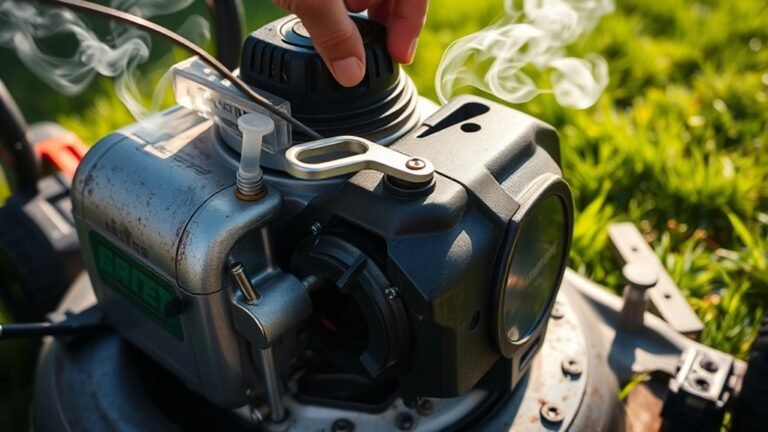
To winterize your lawn mower in 3 easy steps, start by giving the deck a thorough cleaning. Remove all grass clippings and debris, then dry it well. After that, spray the deck with lubricant to prevent rust from forming during the cold months.
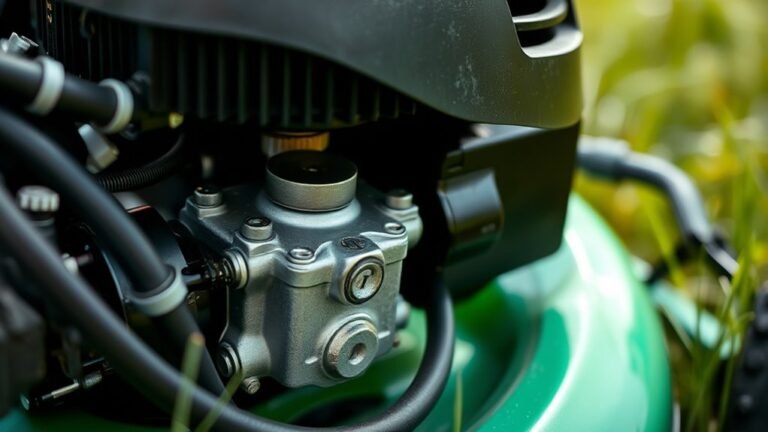
Next, focus on the fuel. You can either drain it completely or add a fuel stabilizer. If you choose the stabilizer, run the engine briefly to make sure it circulates throughout the system.
This step helps keep your mower’s engine in good shape over winter.
Finally, sharpen and balance the blades. This will ensure your mower is ready for a smooth start when spring arrives. Taking these simple steps now not only protects your mower but also extends its life. Keep going to discover helpful tips for a perfect winter prep!
Clean the Deck Thoroughly
Before storing your mower for winter, clean the deck thoroughly to prevent rust and damage. Start by removing all grass clippings and debris from underneath the deck using a garden hose or pressure washer.
Next, take off the blades and clean them with a wire brush or scraper to remove caked-on organic material. For stubborn buildup, use a putty knife or plastic scraper before rinsing the deck and blades with water.
After washing, make sure everything is completely dry to avoid corrosion. Finally, spray the deck with a silicone-based lubricant like WD-40 to prevent rust and reduce future debris accumulation.
This thorough cleaning will keep your mower in top shape and ready for the next season. It’s a simple step that really makes a difference!
Drain or Stabilize the Fuel
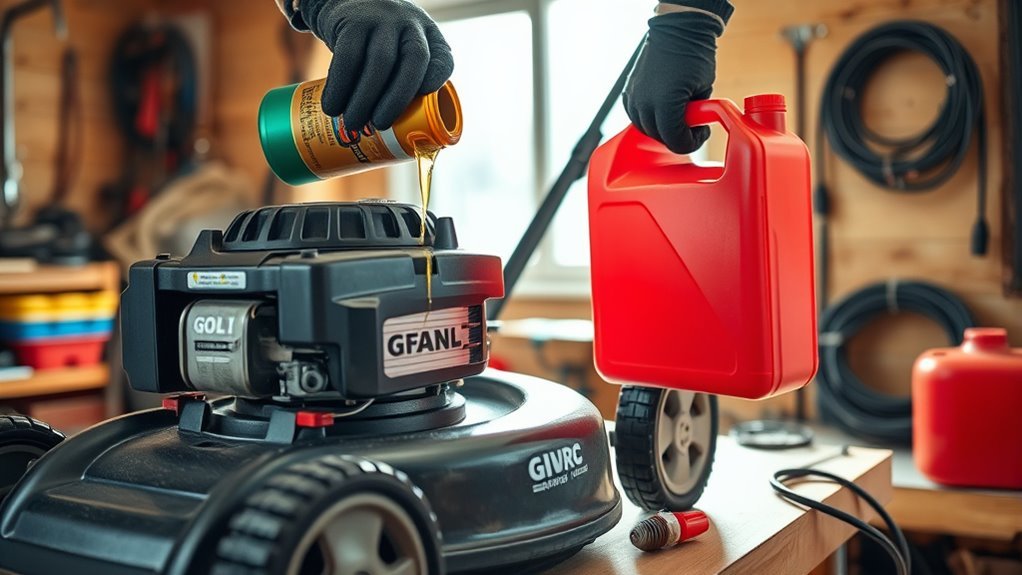
After you’ve thoroughly cleaned the deck, it’s important to take care of the fuel system to keep your mower running smoothly next spring. If you’re storing your mower in a detached garage or shed, add a fuel stabilizer to a full tank of gas. Run the mower for about 10 minutes to circulate the treated fuel throughout the fuel system.
This helps prevent fuel breakdown during winter storage. However, if your mower stays in an attached garage or basement, it’s safer to drain the fuel tank completely. This avoids leaks or fire hazards.
Don’t siphon fuel manually; instead, run the mower until empty or use a fuel transfer pump made for small engines. Store or dispose of leftover fuel in a sealed storage container, away from heat and flames.
Sharpen and Maintain the Blades
While your mower is off and cooled down, remove the blades carefully using a wrench to avoid injury. This step is essential for safe lawn mower maintenance.
Once removed, sharpen the blades with a file or sharpening stone, keeping the original bevel angle to maintain a sharp cutting edge. Make sure to inspect the mower blades for cracks or wear and perform blade repair or replacement as needed.
After sharpening, check the blade balance to prevent vibration during use, which can damage the mower. You can balance the blades on a nail or use a blade balancer.
- Use a sharpening stone to refine the cutting edge
- Look for dents or cracks on the blades
- Balance blades on a nail or blade balancer
- Tighten bolts securely when reinstalling blades
Following these steps guarantees safety and extends your mower’s life. It’s a simple routine that really makes a difference!
Conclusion
Winterizing your lawn mower is as simple as following these three easy steps. By cleaning the deck thoroughly, draining or stabilizing the fuel, and sharpening the blades, you’re giving your mower the care it deserves.
Think of it like tucking your mower in for a long winter’s nap. This way, it wakes up ready to go when spring arrives.
Take these quick steps now, and you’ll save yourself time and hassle later. Proper winterizing helps prevent rust, fuel problems, and dull blades, extending the life of your mower.
So, don’t wait until spring to deal with issues. Follow these winterizing tips to protect your lawn mower through the cold months and enjoy a smooth start to your mowing season!