
How to Do Repairs on an Old Push Mower: 5 Tips to Extend Life
To extend your old push mower’s life, start by regularly checking and maintaining the engine—inspect the oil and spark plug. Cleaning or replacing the air filter at least once per season will keep performance sharp and help your mower run smoothly.
Sharpen and balance the blades for a clean, smooth cut. Also, changing the oil every 25-50 hours keeps the engine healthy and prevents wear.
Always store your mower in a dry, sheltered spot to protect it from rust and damage. Keeping these essentials in check not only extends your mower’s life but also helps you discover even more ways to keep it running strong.
Inspect and Maintain the Engine Components
Before you start mowing, regularly check the oil level and quality. Replace it every 25 to 50 hours of use to keep the engine from seizing.
Proper oil maintenance ensures your engine runs smoothly and avoids costly damage. Next, inspect the spark plug for signs of wear or corrosion. Replacing it annually guarantees reliable ignition and efficient performance.
While you won’t plunge into cleaning the air filter here, remember that it plays an essential role in engine health by preventing dirt from entering. Consistent engine maintenance, including these checks, helps your mower last longer and work better.
Taking these steps before each mowing session will save you time and money by avoiding breakdowns and extending the life of your old push mower’s engine.
Clean or Replace the Air Filter Regularly
Although it’s easy to overlook, cleaning or replacing your mower’s air filter at least once each season is essential for maintaining proper airflow to the engine. A dirty air filter can cut engine performance by up to 50%, making your mowing inefficient and frustrating.
For foam filters, wash them gently with soap and water, let them dry completely, and only replace if damaged. Paper filters need replacing every 25 to 50 hours of use or when they look clogged or torn.
Regular air filter care is a key part of mower maintenance—it prevents engine overheating and keeps your mower running smoothly. Staying on top of this simple lawn care task extends your mower’s life and ensures consistent cutting power.
Sharpen and Balance the Blades for Optimal Cutting
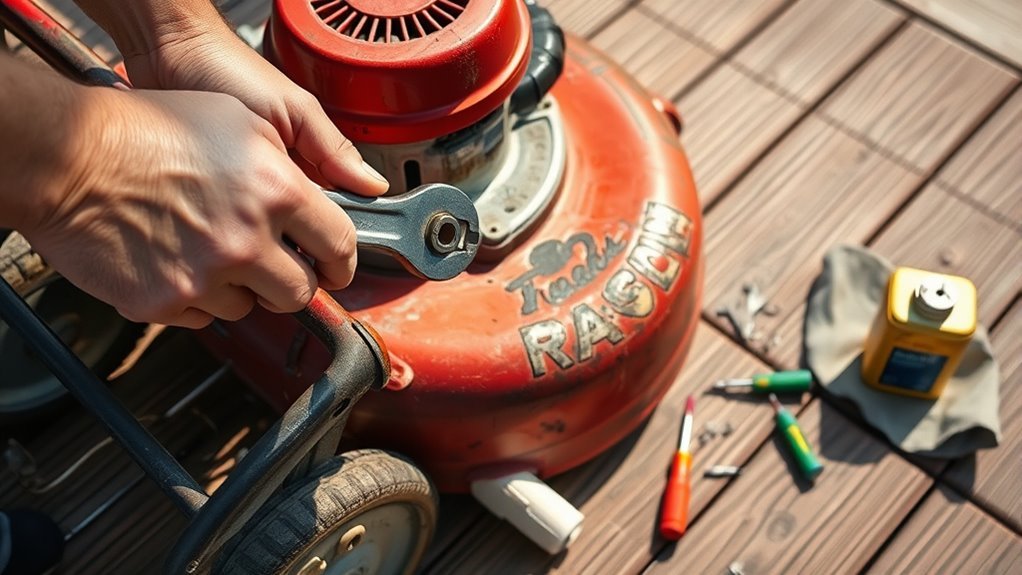
When you sharpen your mower blades at least once each season, you guarantee a cleaner cut and better lawn health. To sharpen mower blades effectively, use a file or grinder, ensuring the edges are even and sharp.
Sharpen mower blades each season for a cleaner cut and healthier lawn using a file or grinder.
After sharpening, it’s vital to balance blades to avoid vibrations that can harm your mower’s engine. Use a blade balancer tool or a simple nail test to check for even weight distribution.
Proper blade maintenance also includes inspecting for bent or cracked blades—replace these promptly to maintain cutting performance. Don’t forget to clean the mower deck and blades after each use, removing grass and debris to prevent buildup and corrosion.
Regular sharpening and balancing of your blades keep your mower running smoothly and your lawn looking great. It’s a simple step that really makes a big difference!
Perform Routine Oil Changes and Checks
To keep your mower’s engine running smoothly, you should perform routine oil changes and checks. Change the oil every 25 to 50 hours or at least once per season to maintain engine health.
Always check the oil level before mowing, and use the manufacturer-recommended lubricants, such as 10W-30 oil. It’s important to inspect the oil for dirt or a burnt smell, and replace it if needed.
Make sure to drain old oil completely to prevent sludge buildup, which can impair engine function. Taking these steps will help your mower last longer and run better.
| Task | Frequency | Notes |
|---|---|---|
| Oil Change | Every 25-50 hours | Use recommended oil type |
| Check Oil Level | Before each use | Keep within fill line |
| Inspect Oil | Regularly | Look for discoloration or smell |
| Drain Old Oil | During oil change | Prevent sludge buildup |
| Use Proper Lubricants | Always | Follow manufacturer’s instructions |
Store the Mower Properly to Prevent Rust and Damage
Since moisture is a mower’s worst enemy, you should store it in a dry, sheltered spot like a garage or shed to prevent rust and damage. Proper storage helps prevent moisture from causing corrosion or degrading parts.
Keep your mower dry and sheltered to avoid rust and damage from moisture.
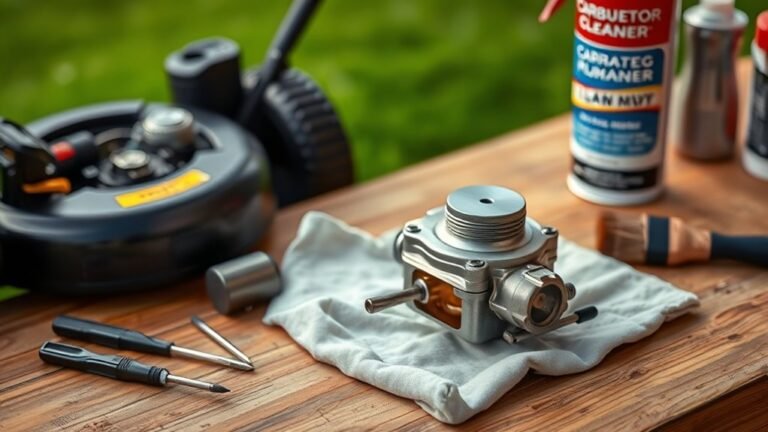
Before you store your mower, make sure to drain the fuel tank or add a stabilizer to avoid fuel gumming that can damage the carburetor. Also, cover the mower with a tarp or protective cover to shield it from dust and environmental elements.
To keep your mower in top shape, remember to:
- Store it off the ground using blocks or a stand to prevent moisture absorption
- Cover it securely to prevent dust and moisture buildup
- Keep it clean and dry before long-term storage
These steps will help you prevent damage and extend your mower’s life. Taking these simple precautions really makes a difference!
Conclusion
By following these simple tips, you can keep your old push mower running smoothly for years. Just like Sarah, who extended her mower’s life by regularly sharpening blades and changing oil, you’ll save money and avoid frustration.
Taking a little time to inspect, clean, and store your mower properly prevents costly repairs and keeps your lawn looking great. Start these habits today, and your mower will thank you with reliable performance season after season.
Regular maintenance is key to extending the lifespan of your push mower. Simple repairs on an old push mower, like blade sharpening and oil changes, make a big difference. Plus, proper storage and cleaning help avoid rust and other damage.
By keeping up with these easy steps, you ensure your mower stays in top shape and gives you the best lawn care experience. So, don’t wait—start doing repairs on your old push mower now and enjoy a healthier, greener lawn all year long!