
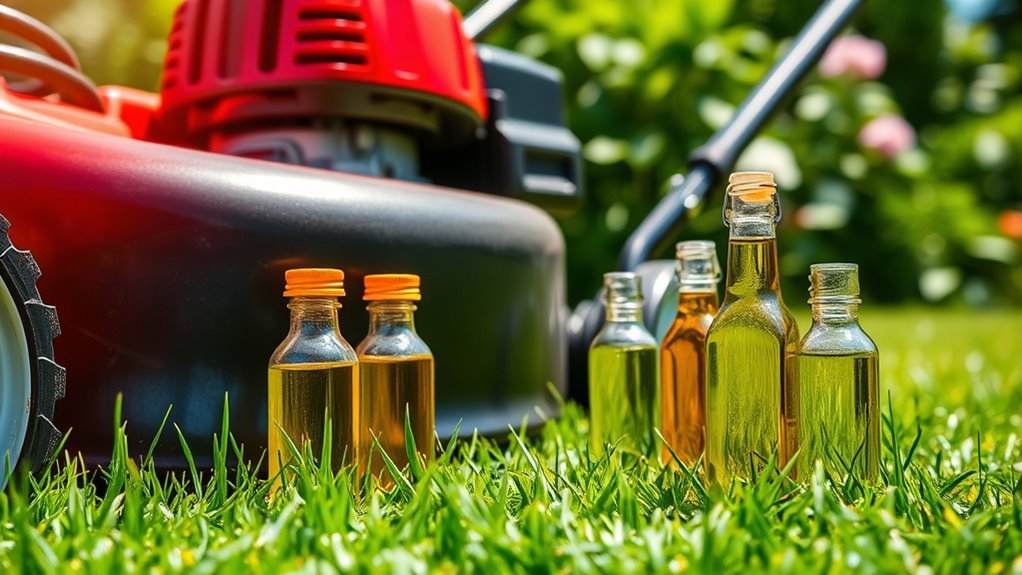
Which Oil Is Best for Lawn Mowers?
You’ll want to use the right oil type and viscosity to keep your lawn mower running smoothly and lasting longer. Choosing the best oil for lawn mowers is key to protecting your engine and ensuring optimal performance.
For warm temperatures, SAE 30 is a solid choice, while synthetic 5W-30 works better if you’re in colder areas because it flows easier and protects your engine better.
Synthetic oils also offer overall superior performance. Checking your oil regularly and changing it every 20-50 hours helps prevent damage.
Keep going to discover tips on choosing and maintaining your mower’s oil.
Selecting the Right Oil Type and Viscosity for Your Lawn Mower
When choosing oil for your lawn mower, selecting the right type and viscosity is essential to keep the engine running smoothly. For air-cooled engines, using the correct lawn mower oil guarantees ideal performance and longevity.
In warmer temperatures, SAE 30 conventional oil works well. But if you’re dealing with colder climates, thinner oils like SAE 10W-30 or 5W-30 are better choices.
Synthetic oils, including full synthetic options such as 5W-30 and 15W-50, provide superior protection across various temperature ranges compared to conventional oil. These synthetic oils flow better in cold weather, which helps reduce engine wear and makes starting the mower easier.
Always check your mower’s manual to confirm the recommended oil type and viscosity. Remember, using the right oil during an oil change and making sure your oil filter is clean will keep your mower running efficiently and help prevent overheating.
Best Practices for Lawn Mower Oil Maintenance and Replacement
Although regular use keeps your mower running smoothly, you should check and maintain the oil level on a level surface. Make sure it stays between the full and add marks on the dipstick.
For effective oil maintenance, warm up the engine before an oil change. This helps drain old oil completely and removes contaminants.
Always use the recommended oil type and viscosity, whether it’s conventional or synthetic oil. If your mower has an oil filter, don’t forget to replace it when changing oil.
Regular oil replacement every 20 to 50 hours, or at least once a year, helps ensure your engine lasts longer.
| Task | Frequency | Tips |
|---|---|---|
| Check oil level | Before each use | On a level surface |
| Oil change | Every 20-50 hours | Warm up engine first |
| Oil type | As manual advises | Use correct viscosity |
| Oil filter | With each oil change | Replace if applicable |
| Oil replacement | At least annually | Use high-quality lawn mower oil |
Conclusion
Choosing the right oil for your lawn mower isn’t just about following recommendations—it’s about ensuring your mower runs smoothly season after season. Using the proper oil type and viscosity protects your engine from wear and keeps performance at its best.
So, why risk damage with the wrong oil when a simple choice can make all the difference? Stay consistent with oil changes, and your mower will thank you with reliable, long-lasting power every time you cut the grass.
Remember, the best oil for lawn mowers is typically a high-quality SAE 30 or 10W-30 oil, depending on the temperature and your mower’s specifications. Using the right lawn mower oil not only boosts engine efficiency but also extends the life of your mower. Regularly checking and changing your oil ensures optimal performance and prevents costly repairs down the road. So, if you want a healthy, powerful mower that lasts for years, choosing the correct oil and maintaining it properly is key.