
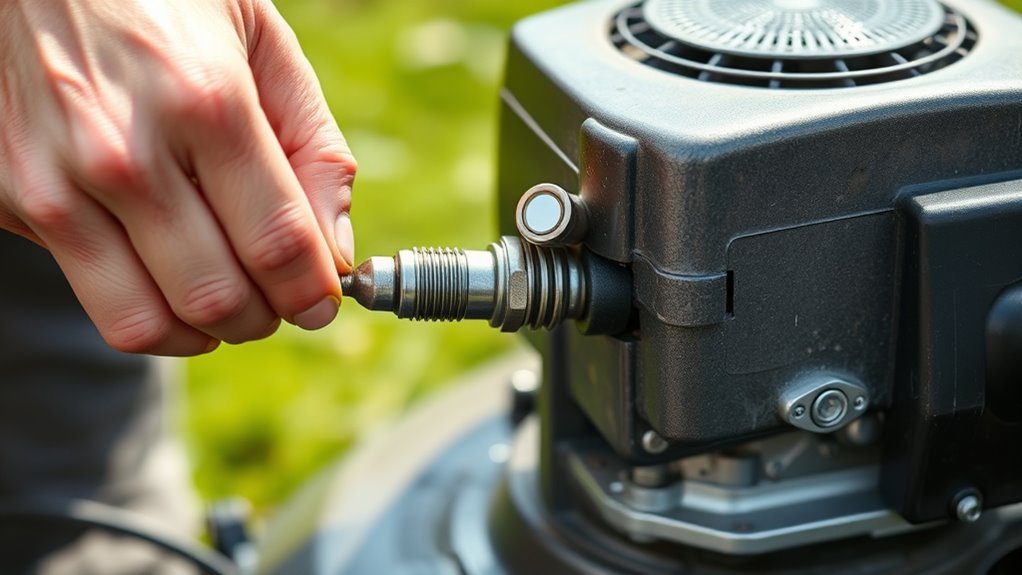
How to Remove the Spark Plug From Your Lawn Mower in 5 Easy Steps
First, disconnect the spark plug lead and clean the area around it to prevent debris from falling in. This step is crucial to keep dirt from getting inside the engine, which can cause problems later.
Next, spray penetrating oil at the plug base and wait 15–20 minutes to loosen it. This gives the oil time to work and makes removing the plug much easier.
Use the correct spark plug socket with a wrench to avoid damaging threads. It’s important to use the right tool here so you don’t strip the plug or the engine.
Gently heat the engine block nearby to expand the metal for easier removal. This little trick can make a big difference if the plug feels stuck.
Then, carefully turn the plug counterclockwise to remove it. Take your time and don’t force it too hard.
Keep following these steps and you’ll handle the process even more smoothly.
Disconnect the Spark Plug Lead and Clean the Area
Before you remove the spark plug, disconnect the spark plug lead to avoid accidental ignition or electrical shock. This essential step in lawn mower maintenance protects you from personal injury and prevents damage to the ignition system.
Once disconnected, gently wipe the area around the spark plug with a clean rag to create a clean area free of dirt and debris. Use a wire brush or compressed air to remove stubborn grime or grass clippings that could contaminate the spark plug during removal.
Inspect the spark plug lead for any cracks or wear and replace it if necessary before reattaching. Handling the spark plug lead and spark plug carefully ensures you don’t damage the ceramic insulator or ignition wire, keeping your mower running smoothly.
Apply Penetrating Oil to Loosen the Spark Plug
After cleaning the area and disconnecting the spark plug lead, spray penetrating oil around the base of the spark plug to help break down any rust or debris. This step is vital for effective spark plug removal and engine maintenance.
Here’s what you need to do:
- Use penetrating oil specifically designed for engine parts to guarantee engine safety.
- Spray generously around the spark plug base, targeting rust and debris buildup.
- Let the oil sit for 15-20 minutes so it can penetrate and loosen the spark plug.
- This reduces the risk of damaging the spark plug threads during removal, especially if moisture or sediment caused it to stick.
Applying penetrating oil properly makes spark plug removal smoother and protects your engine’s components. It’s a simple step that really pays off!
Use the Correct Spark Plug Socket and Wrench
While it might be tempting to grab any socket you have on hand, using the correct spark plug socket and wrench is essential to prevent damage and guarantee a smooth removal.
Choose a spark plug socket that matches your lawn mower’s spark plug size for a proper fit. This ensures the socket grips the plug securely, minimizing the risk of stripping or damage.
Select a spark plug socket that perfectly fits your lawn mower’s plug to avoid damage and ensure a secure grip.
Attach the socket firmly to a wrench or ratchet to gain control and torque as you remove the spark plug. Avoid regular sockets; spark plug sockets have a rubber insert that protects the porcelain insulator from cracking.
Before turning, make sure the socket seats fully onto the plug. Then, turn counterclockwise with steady pressure to loosen the spark plug without damaging threads or breaking it.
Gently Heat the Engine Block to Expand Metal
If you’re dealing with a stubborn spark plug, gently heating the engine block can help by causing the metal to expand slightly. This makes it easier to loosen the plug. Here’s how to do it safely:
First, apply penetrating oil around the spark plug and let it sit to penetrate. Then, use a heat gun or a hairdryer on low to evenly heat the engine block near the plug.
Be careful not to overheat it, though. You want to avoid damaging any plastic parts or other components.
After heating, allow the engine to cool gradually before you try to remove the spark plug. This helps prevent warping.
This controlled metal expansion, combined with the oil, helps break the plug free without harming your mower during engine cooling.
Loosen and Remove the Spark Plug Carefully
When you’re ready to remove the spark plug, use a spark plug socket that fits snugly to avoid damaging the porcelain or electrodes. Attach the socket to a ratchet for better leverage and control when you loosen the spark plug.
Before turning, apply some penetrating oil around the base, especially if it’s stuck from corrosion or deposits. Turn the ratchet counterclockwise slowly and steadily to loosen the plug without causing thread damage.
Avoid sudden or excessive force during removal to protect the cylinder head threads. Using a torque wrench for the final removal step ensures you don’t apply too much pressure.
Conclusion
Removing your lawn mower’s spark plug is like opening a tiny door to your machine’s heart. By disconnecting the lead, applying oil, using the right tools, warming the engine, and carefully unscrewing, you’re gently coaxing it open.
Each step you take breathes new life into your mower, keeping it running strong and ready. So, treat this process with care—it’s the key to your mower’s smooth, powerful rhythm.
When you remove the spark plug properly, you ensure your lawn mower runs efficiently and lasts longer. This simple maintenance step helps prevent engine issues and keeps your mower in top condition. Remember, using the right tools and warming the engine first makes the job easier and safer.
Taking time to remove the spark plug correctly is essential for lawn mower upkeep. It’s a quick, easy step that helps keep your mower running smoothly, so your grass always looks its best.