

How to Start a Riding Lawn Mower in 10 Easy Steps
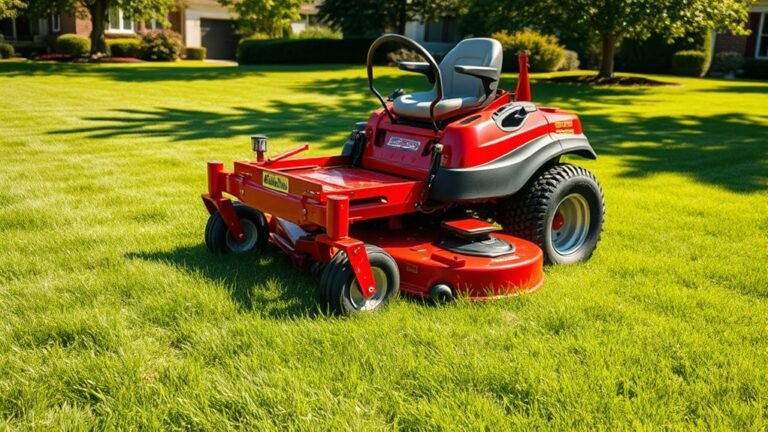
To start your riding lawn mower safely and efficiently, begin by preparing it on flat ground and putting on your safety gear. It’s important to check the fuel and oil levels before you do anything else to ensure your mower runs smoothly.
Next, hop into the operator’s seat to engage the safety sensors. If your engine is cold, set the throttle to choke.
Don’t forget to engage the parking brake and shift the mower into neutral.
Now, insert the ignition key and turn it until the engine fires up. Give the engine a brief warm-up to get everything running right.
Once warmed, release the brake and engage the blades so you can start mowing.
Keep an eye on your mower’s performance and stay alert for safety as you work.
For more tips on smooth operation and maintenance, feel free to explore additional guidance whenever you need it!
Prepare the Mower and Safety Systems
Before you start the mower, make sure it’s on a flat, stable surface with all safety features like seat switches and brakes engaged. First, put on your safety gear—safety glasses, hearing protection, gloves, long pants, and closed-toe shoes—to protect yourself during operation.
Next, check that the parking brake is fully engaged to prevent any accidental movement. Make sure the blades are disengaged; this is vital for safe startup.
Insert the key into the ignition switch and turn it to the “On” position, watching for all dashboard indicators to light up. If your engine is cold, set the throttle to the “Choke” or “Start” position.
Once the engine runs smoothly, adjust the throttle to a higher setting. These steps guarantee your mower is ready and safe to start.
Check Fuel and Oil Levels
A key step in preparing your riding lawn mower is checking the fuel and oil levels to guarantee smooth operation. First, check the fuel level and ensure the tank is about 3/4 full with fresh, unleaded gasoline to prevent engine stalls.
Next, inspect the oil level using the dipstick: wipe it clean with a rag, reinsert it fully, then pull it out to check that the oil level sits between the minimum and maximum marks. If the oil level is low, add the recommended type—usually 10W-30—as specified in your manual.
Also, look for any signs of leaks or contamination in both fuel and oil systems. Properly checking these levels helps ensure a reliable engine start every time. It’s a small step that makes a big difference!
Sit in the Operator’s Seat and Engage Safety Features
When you sit fully in the operator’s seat, you activate important safety sensors that prevent the mower from starting accidentally. Make certain you’re seated comfortably and stably to easily reach all controls.
Before you start, engage the parking brake to avoid any unintended movement. Also, confirm the blade engagement lever is off; this safety feature ensures the blades won’t spin during startup.
Some mower models require you to press the seat switch once seated to enable the engine to start properly. Engaging these safety features is essential for your protection and smooth operation.
Set the Throttle and Choke Controls
First, find the throttle and choke controls on your mower’s dashboard. You’ll need to adjust the throttle to the “start” or “fast” position, usually marked by a rabbit icon.
Then, set the choke depending on whether the engine is cold or warm to guarantee a smooth start. This helps get your mower running just right.
Locate Throttle Control
Where can you find the throttle control on your riding lawn mower? Typically, it’s a lever or dial located near the dashboard or under the engine cover.
Before you start the engine, look for this control to adjust engine speed. Set the throttle control to the “start” or “fast” position to ensure a quick startup.
Don’t forget to engage the parking brake before turning the key. This safety step prevents accidental movement.
Once you’ve located the throttle control and set it properly, you’re ready to proceed with starting the engine. Proper use of this control helps prevent engine stalling and ensures a smooth startup process every time you use your mower.
Adjust Choke Position
Although you’ve set the throttle to the “start” position, you’ll also need to adjust the choke to help the engine start smoothly. Locate the choke control lever near the throttle control or on the dashboard and move it to the fully closed or “on” choke position.
This restricts airflow, making it easier for the engine to start, especially when the engine is cold. Once the engine fires up and warms, gradually push the choke lever to the “off” or “open” position to allow normal airflow.
Next, adjust the throttle control to increase engine speed, ensuring the mower deck engages smoothly. Proper choke position and throttle adjustment are essential for a quick, trouble-free start and to get your riding mower ready for efficient cutting.
Throttle Settings Explained
How do throttle and choke settings work together to get your riding lawn mower running smoothly? The throttle controls your engine speed, often marked with “Slow,” “Fast,” or a rabbit icon. For an easy engine start, move the throttle to the fast position.
This raises the engine RPM, helping it turn over quickly. At the same time, set the choke to the “on” or “closed” position if the engine is cold. This restricts airflow, enriching the fuel mixture for a smoother start.
Once the engine warms up, gradually open the choke and adjust the throttle as needed to maintain steady operation. Properly adjusting these controls prevents stalling and ensures your mower runs efficiently right from the start.
Engage the Parking Brake
Before you start your riding lawn mower, make sure you fully engage the parking brake to keep the mower from moving unexpectedly. Locate the parking brake lever near the seat or control panel, then pull or push it into the locked position.
Engaging the parking brake is essential for safety—it prevents the mower from rolling and activates safety systems that block the engine from starting if the brake isn’t engaged. Look for the parking brake indicator light to confirm it’s properly engaged.
Never try to start the mower when the parking brake is off, as this could cause accidents or damage. Taking these steps ensures you start the mower safely and avoid unnecessary risks.
Shift the Gear to Neutral
To start your riding lawn mower safely, make sure you shift the gear lever to the neutral position. Locate the gear shift, usually near the steering wheel or under the seat, and move it to “N.”
This step is vital because starting the engine with the gear in any drive position can cause the mower to lurch forward or damage the transmission. After shifting, gently wiggle the gear shift to confirm it’s firmly in neutral and won’t slip into another gear.
Many models include a safety feature that prevents starting the engine unless the gear is in neutral, so double-check this before proceeding. Ensuring the gear shift is in the neutral position is essential for your safety and the mower’s proper operation during starting.
Insert and Turn the Ignition Key
First, find the ignition switch and make sure your key is properly oriented before inserting it fully. Turn the key slowly clockwise to the “Start” position, holding it until the engine begins to turn over.
Always check that safety features are engaged before starting to avoid any accidents. It’s a good habit to stay safe and sound every time you start your car.
Locate Ignition Switch
You’ll find the ignition switch on the dashboard or near the steering column of your riding lawn mower. It’s where you’ll insert the key to power up your mower.
Before starting, make sure you locate this switch so you know exactly where to turn the key. The ignition switch is designed for easy access, often situated within arm’s reach on the dashboard.
Once you have the key in hand, insert it fully into the ignition slot until it clicks. This ensures a proper connection.
Knowing the exact spot to turn the key on the dashboard helps you avoid fumbling and makes starting your mower a smooth process. Identifying the ignition switch is the first step toward getting your mower running.
Proper Key Turning
How exactly should you turn the ignition key to start your riding lawn mower? First, insert the key fully into the ignition switch until it clicks into the “Off” position.
Then, turn the key clockwise to the “On” position to activate the mower’s electrical system. Next, continue turning the key further clockwise to the “Start” position to engage the starter motor and start the engine.
Hold the key in this position until the engine fires, then release it so the key returns to the “On” position.
After you finish mowing, make sure to turn the key fully back to the “Off” key position to shut down the engine and prevent accidental starting. Proper key turning guarantees your mower starts smoothly every time.
Ignition Safety Checks
Before turning the ignition key, make sure all safety switches like the seat switch and parking brake are properly engaged. This step is vital for your safety and the mower’s operation.
Insert the key fully into the ignition switch until it clicks into the “On” position. Confirm the ignition switch is set to “Run” or “On” before you proceed.
Next, turn the key clockwise to activate the engine starter motor, holding it for a few seconds until the engine fires up. If the safety switches or parking brake aren’t engaged, the engine starter won’t activate, protecting you from accidental starts.
Once you finish mowing, turn the key to the “Off” position and remove it to shut down the mower safely.
Warm Up the Engine
Although it might be tempting to start mowing right away, you should let the engine warm up by idling for 30 seconds to a minute after starting. This engine warm-up ensures your mower runs smoothly and lasts longer.
Let your mower engine idle for 30 seconds to a minute before mowing to ensure smooth operation and longevity.
Here’s how to do it right: engage the choke if the engine is cold to help with a quicker start. Then, let the engine idle calmly before adjusting the throttle.
Gradually increase the throttle to reach the best operating temperature. Just be sure to avoid revving the engine excessively during warm-up to prevent wear.
Wait until the engine is running steadily and responds well before you begin mowing. Taking these steps will keep your mower in great shape!
Disengage the Parking Brake and Engage the Blades
Once your engine is running smoothly and the mower is still, you can safely disengage the parking brake to allow movement.
Before you start the mower’s blades, make sure the parking brake is fully disengaged. This helps prevent damage or injury.
Only engage the blades when the engine is running and the mower remains stationary. Doing things in this order keeps you safe and your mower working great.
| Action | Reason |
|---|---|
| Disengage parking brake | Allows mower to move freely |
| Engage the blades | Prevents blade damage/injury |
| Start the mower safely | Ensures controlled operation |
Begin Mowing Safely and Monitor Performance
As you begin mowing, make sure you wear protective gear like safety glasses and closed-toe shoes to keep yourself safe. Before you start moving, ensure the parking brake is disengaged and the blades are engaged only when the engine is running smoothly.
Check the battery connections to avoid unexpected stalls and inspect the spark plug for peak ignition. Start on flat, debris-free ground to maintain control.
While mowing, pay attention to these key points:
- Adjust cutting height and speed gradually
- Listen for unusual noises or vibrations
- Avoid sudden turns or slopes
- Keep an eye on blade engagement
- Stop immediately if performance drops
Following these steps helps you mow safely and keeps your mower in top shape.
Conclusion
Starting your riding lawn mower is easier than you think—just follow these 10 simple steps. Did you know that over 70% of mower-related accidents happen because safety features weren’t properly engaged? Taking a moment to prepare and check your mower not only protects you but also guarantees smooth operation.
So, trust the process, stay alert, and enjoy a safe, efficient mowing experience every time you head outside. By following these easy steps, you’ll be able to start your riding lawn mower confidently and keep it running smoothly. Remember, safety and proper preparation are key to a successful mowing session. Happy mowing!