
7 Key Factors That Affect How Much a Zero Turn Mower Does Weigh
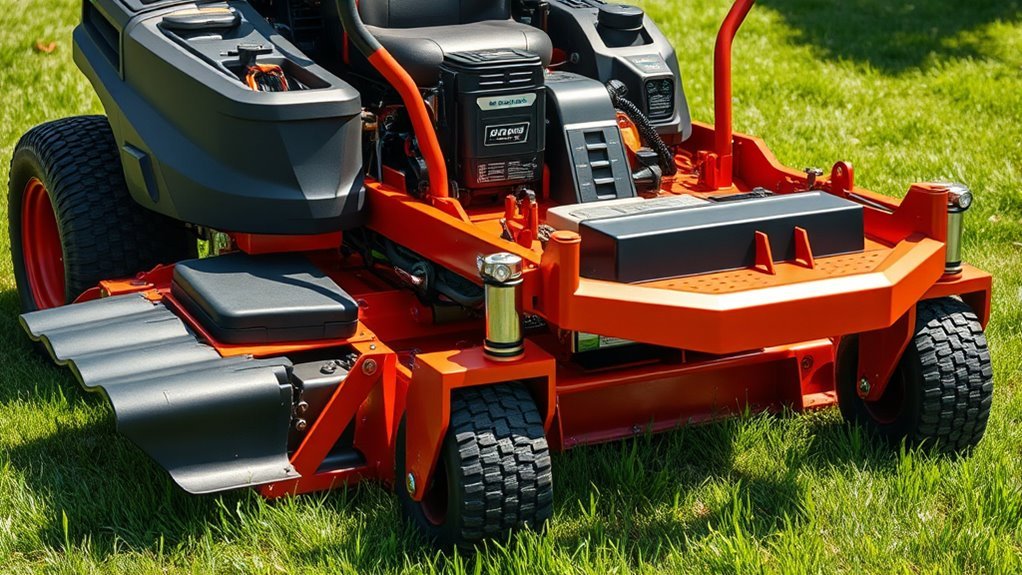
When you’re choosing a zero turn mower, several key factors influence how much it weighs. Understanding these can help you pick the right model for your needs. Deck size and material are big players—steel decks are heavier than aluminum or plastic ones.
Engine power and type matter too; bigger, more powerful engines add extra weight.
The frame and chassis construction also affect both durability and heaviness. Plus, transmission and hydraulics contribute mass to boost performance.
Battery size and electrical components can tip the scales as well. Don’t forget about extra attachments—they add their own weight.
Lastly, design choices made for stability often make mowers heavier. Keep reading to see how each factor impacts your mower’s feel and function.
Deck Size and Material
Because deck size and material directly impact a zero turn mower’s weight, you’ll notice larger decks add significant mass due to extra material and structural reinforcements. As the deck size increases, so does the cutting width and material volume, naturally boosting mower weight.
Deck material plays a pivotal role too; steel decks, often thicker with higher metal gauges, add more weight but improve durability. Aluminum or plastic alternatives are lighter but may sacrifice longevity. The deck thickness and metal gauges determine how much weight you’re adding with each layer.
Plus, features like reinforced edges and extra structural reinforcement to handle tougher conditions also contribute to the total mass. Understanding how deck size and deck material influence mower weight helps you choose one that balances performance and manageability.
Engine Power and Type
When you choose a zero-turn mower, engine power and type play a crucial role in determining its weight. Higher horsepower means a larger engine size, which usually adds engine weight.
V-twin engines, common in powerful models, weigh more than single-cylinder ones but offer greater engine durability. Fuel-injected engines are slightly heavier than carbureted types because they have more complex engine construction.
Engine materials also influence weight; cast iron engines add heft but improve durability compared to aluminum.
| Factor | Impact on Weight |
|---|---|
| Horsepower | 15-35 HP, higher = heavier |
| Engine Type | V-twin heavier than single-cylinder |
| Fuel Injection | Adds slight weight |
| Engine Materials | Cast iron > Aluminum weight |
| Engine Durability | Heavier engines last longer |
Frame and Chassis Construction
When you examine the frame and chassis of a zero-turn mower, you’ll find they’re usually made from steel or aluminum, each affecting weight differently. The thickness and design of the frame play a big role in how heavy and sturdy your mower is.
Plus, extra structural features like reinforcements or mounting points can add noticeable weight. It’s all about balancing strength with usability. So, the materials and build really shape the mower’s overall feel and performance.
Material Types Used
The materials used in the frame and chassis construction play a crucial role in determining the weight of your zero-turn mower. Steel, aluminum, and plastic are common materials that directly affect the mower’s weight and durability.
Steel frames add significant weight due to their strength, often increasing the mower’s weight by several hundred pounds. But they excel in durability and corrosion resistance, so they really hold up well over time.
Aluminum chassis offer a lighter alternative, cutting down weight by 50 to 100 pounds. They still maintain good durability and resist corrosion, making them a solid choice if you want something lighter.
Plastic, especially reinforced types, helps minimize weight even more—sometimes cutting 20 to 40 percent. Yet, they still provide enough structural integrity to keep things sturdy.
Choosing the right material is all about balancing weight with durability and corrosion resistance. This balance will impact your mower’s performance and longevity in different conditions.
Structural Design Impact
Choosing materials like steel, aluminum, or reinforced plastic sets the foundation. But how these materials are shaped and assembled also shapes your mower’s weight.
The structural design, including chassis materials and metal gauge, directly affects weight impact. A reinforced frame with thicker deck thickness and added structural supports boosts durability features but adds mass.
Proper weight distribution depends on the layout of these components. This influences handling and stability.
| Component | Material Options | Weight Impact |
|---|---|---|
| Frame | Steel, Aluminum, Composite | Steel adds significant weight |
| Deck Thickness | Thin to Thick Steel | Thicker decks increase weight |
| Structural Supports | Basic to Reinforced | More supports add weight |
| Durability Features | Roll Bars, Bumpers | Extra features increase mass |
Transmission and Hydraulic Systems
When you choose a zero-turn mower, you’ll notice the transmission needs to be tough enough to handle heavy use. This often means added weight.
The hydraulic system also plays a big role, with larger components increasing the mower’s overall mass. This can affect how easy it is to maneuver.
Keep in mind, maintaining these heavy parts requires regular care. Doing so ensures durability and smooth operation over time.
Transmission Durability Needs
Although you might prioritize engine power and cutting capacity, transmission durability plays a crucial role in determining a zero-turn mower’s overall weight and performance. Transmission durability depends heavily on engine size and the load capacity the mower must handle.
Heavier models require reinforced gears and robust transmission design to withstand stress, which naturally adds to mower weight. Hydraulic systems complement this by incorporating multiple hydraulic circuits that manage power distribution efficiently.
These durability factors ensure reliable mower performance, especially under demanding conditions. While stronger transmissions and sophisticated hydraulic setups increase weight, they’re essential for longevity and smooth operation.
Hydraulic System Weight Impact
The durability of your mower’s transmission often goes hand in hand with the hydraulic system‘s design, both of which can add significant weight. The hydraulic system alone can contribute between 10 to 50 pounds to your mower weight, depending on its size and capacity.
Larger hydraulic cylinders and more hydraulic fluid increase the hydraulic weight, especially when paired with heavy-duty hydraulic pumps and valves found in commercial-grade mowers. Don’t forget the hydraulic hoses and fittings—they add extra weight that affects handling and portability.
The choice of hydraulic material also matters; using lightweight alloys can reduce weight compared to steel components. When evaluating mower weight, consider how these hydraulic components impact performance and maneuverability without sacrificing durability or power.
Maintenance of Heavy Components
Because heavy-duty transmissions and hydraulic systems bear significant loads and contribute substantial weight to your zero-turn mower, maintaining them properly is essential to keep your machine running smoothly and efficiently. Regular transmission maintenance and transmission system inspection help you detect early signs of component wear and tear, preventing costly breakdowns.
Likewise, hydraulic system upkeep involves monitoring hydraulic fluid levels and checking for hydraulic leaks, which can add unwanted weight and reduce performance. Addressing hydraulic component corrosion promptly preserves the integrity of heavy parts like pumps and valves.
Keeping a close eye on hydraulic pump condition ensures the system operates efficiently without excess strain. Though maintenance costs may add up, they prevent weight impact from damaged or leaking parts.
Ultimately, this extends your mower’s lifespan and maintains ideal weight balance for effective operation.
Battery Size and Electrical Components
When you choose a zero-turn mower with a larger battery pack, you’ll notice it adds significant weight—lithium-ion batteries alone can add between 10 and 50 pounds depending on their capacity. This power source influences mower design and weight distribution, especially with battery placement affecting balance.
Besides batteries, electrical components like controllers and wiring also contribute to the weight impact. Advances in battery technology help reduce this burden but don’t eliminate it.
Electrical components add weight too; improved battery tech lessens it but can’t completely remove the burden.
Consider these factors:
- Higher battery capacity means longer run time but more weight.
- Battery placement alters mower stability and handling.
- Electrical wiring and sensors add incremental weight.
- Modern battery technology aims to reduce weight without sacrificing power.
Understanding these helps you pick a mower that balances power and portability. It’s all about finding the right fit for your needs.
Additional Attachments and Accessories
Battery size and electrical parts add weight to your zero-turn mower, but attachments and accessories can influence it even more. Adding baggers, mulchers, or snow plows typically causes a weight increase of 50 to 150 pounds.
Hydraulic attachments like front loaders or debris blowers can add over 200 pounds, markedly affecting mower weight and ground pressure. Installing heavy-duty tires or tracks as accessories contributes 20 to 100 pounds, impacting weight distribution and soil contact.
Even smaller accessories, such as LED lighting or sunshades, cumulatively add up to 20 pounds. Specialized additional equipment like turf aerators or sprayers further increase mower weight by 30 to 80 pounds.
Each accessory added or mower modification has a weight impact you should consider. It’s important for transport, maneuverability, and ground pressure management.
Design Focus on Durability and Stability
Though you might prioritize maneuverability, zero-turn mowers designed for durability and stability often weigh more due to reinforced steel decks, heavy-duty frames, and wider wheelbases. These features ensure your mower lasts longer and performs reliably under tough conditions.
Key design factors adding weight include:
- Steel decks and heavy-duty frames made from thick material alloys boost durability.
- A wider wheelbase and heavy chassis improve stability on uneven terrain.
- High-capacity engines provide powerful performance but add significant weight.
- Robust hydraulic systems enhance control but increase overall mower heft.
When you choose a mower focused on durability and stability, you’re investing in a machine that stands up to wear and delivers consistent, safe operation over time. It’s all about getting a mower that can handle whatever you throw at it without breaking down.
Conclusion
Understanding what affects your zero turn mower’s weight is like peeling an onion—each layer reveals something important. From deck size and engine power to attachments and frame durability, every factor adds its own heft.
Knowing these details helps you pick the right mower that suits your needs without feeling like you’re lugging around a tank. It’s all about balancing performance with ease of use.
Keep these key points in mind, and you’ll make a choice that’s both smart and efficient for your mowing tasks. By understanding the main factors that affect how much a zero turn mower does weigh, you can find the perfect machine that handles your lawn effortlessly without unnecessary bulk.