
How to Drain Oil From Lawn Mower in 3 Easy Steps
To drain oil from your lawn mower, start by warming up the engine. Run it for a few minutes to get the oil flowing smoothly.
Then, turn off the mower and disconnect the spark plug for safety.
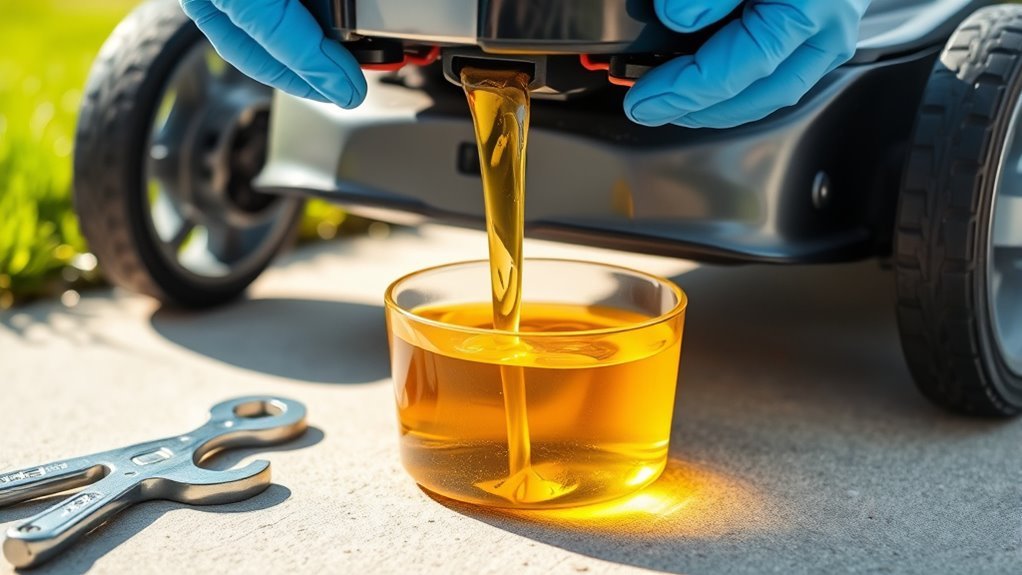
Next, position your mower on a flat surface. Remove the oil cap or drain plug, and let the old oil drain into a pan.
Make sure to catch all the oil to avoid spills.
Finally, refill the mower with fresh, manufacturer-recommended oil. Check the oil level with the dipstick, and securely replace the cap.
Keep going to discover tips for safe disposal and proper maintenance.
Prepare and Warm Up the Lawn Mower
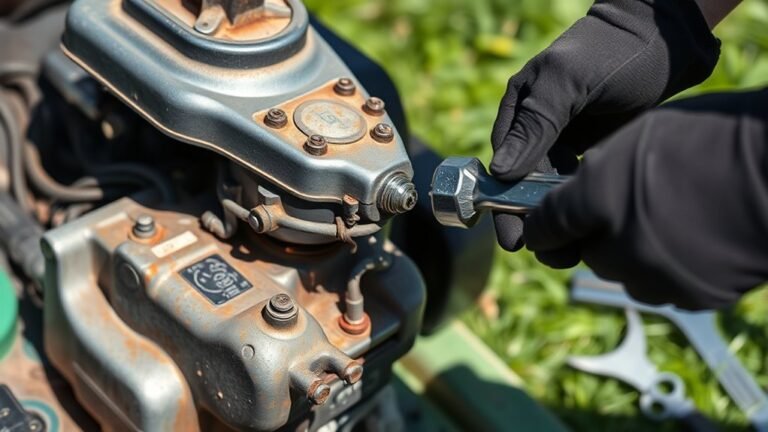
Before you begin draining the oil, make sure to turn off the lawn mower and disconnect the spark plug wire for safety.
Next, run the engine for 3-5 minutes to get it warm. A warm engine helps the oil flow better during the oil change.
Running the engine for a few minutes warms the oil, making it flow easier during your oil change.
This warming up lets the oil drain more completely through the oil drain tube or drain plug.
After warming it up, let the engine cool for at least 15 minutes. This helps you avoid burns from hot oil.
Place a drain pan under the drain plug or fill tube to catch the oil effectively.
If your mower has a fuel tank, either drain the fuel or run the engine until it’s empty to prevent spills.
Getting everything ready like this makes the oil change safer and smoother, protecting both you and your lawn mower.
Drain the Old Oil Safely
Once you’ve guaranteed the engine is cool and the spark plug wire is disconnected, position your mower on a flat surface. Then, tilt it with the air filter facing upward to avoid oil spilling into sensitive parts.
To drain the oil in a lawn mower engine, locate the oil cap and either remove the drain plug or tilt the mower so the oil drains through the fill tube. If your mower lacks a drain plug, tilting the mower carefully or using an oil extractor pump through the dipstick works well.
Always check the oil filter area for leaks and avoid contaminating the oil filter. Collect the used oil in a suitable container and never pour it down drains.
Make sure you dispose of the used oil responsibly at a recycling center or authorized disposal site. This helps protect the environment.
Refill With Fresh Oil and Secure the Cap
As you finish draining the old oil, pour in the manufacturer-recommended amount of fresh oil carefully using a funnel to avoid spills. Refill the engine oil slowly until it reaches the full mark on the dipstick or fill plug.
After filling, insert the dipstick, remove it, and do a level check to ensure the oil is at the correct level. Next, securely reinstall the oil cap or dipstick, tightening it properly to prevent leaks.
Start the engine and let it run briefly to circulate the new oil. Turn the engine off, then recheck the oil level with the dipstick. If needed, add more oil to reach the full mark.
Finally, secure the cap firmly, completing the refill process for your lawn mower’s engine oil. Easy, right? Just take it step by step, and you’ll be good to go!
Conclusion
Now that you’ve warmed up your mower and safely drained the old oil, picture the fresh, clean oil flowing smoothly into the engine. Each drop promises better performance and longer life.
As you tighten the cap, imagine the satisfying click sealing in all that care. Soon, your mower will roar to life, ready to tackle your lawn like never before.
You’ve done more than maintenance—you’ve revived your machine’s heart. Draining oil from your lawn mower is simple, but it’s a crucial step to keep your engine running smoothly. With this easy process, you’re ensuring better engine performance, increased mower longevity, and a healthier lawn care routine. So next time you drain oil from your lawn mower, remember: you’re not just changing oil, you’re giving your mower a fresh start!