
How to Drain Gas From Lawn Mower in 7 Easy Steps
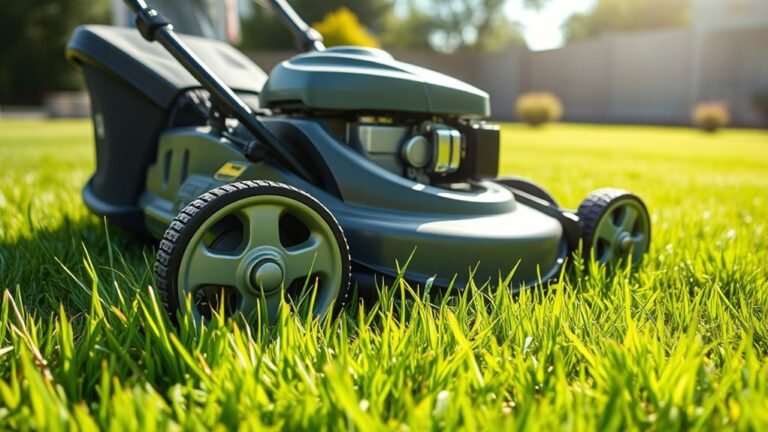
To drain gas from your lawn mower, start by preparing the mower outdoors. Make sure the engine is off and cooled down before you begin. This is important for your safety and to avoid any accidents.
Next, gather your safety gear like gloves and goggles. Then, disconnect the spark plug wire to prevent the mower from accidentally starting while you work on it. Safety first, right?
Now, use a siphon pump or carefully remove the fuel line to drain the gas into an approved container. This step helps you get rid of the old fuel that could cause problems if left in the tank.
After draining, run the engine until it stops on its own. This clears out any leftover fuel in the system.
Finally, secure everything back in place and dispose of the gas properly.
Keep reading for some helpful tips that will make draining gas from your lawn mower even easier next time!
Prepare Your Lawn Mower and Work Area
Before you begin draining gas from your lawn mower, make sure the engine is off and completely cooled to avoid burns or accidents. Position your lawn mower in a well-ventilated outdoor spot, keeping it away from open flames, sparks, or static sources. This reduces the risk of fire during the draining process.
To safely drain gas, disconnect the spark plug wire so the engine won’t accidentally start. Place a drip tray or absorbent pad beneath the fuel tank to catch any spills and protect your workspace.
Preparing your lawn mower and work area properly ensures you manage the fuel system without mess or danger. With these steps, you’re ready to drain gas from the tank efficiently and safely.
Gather Necessary Tools and Safety Equipment
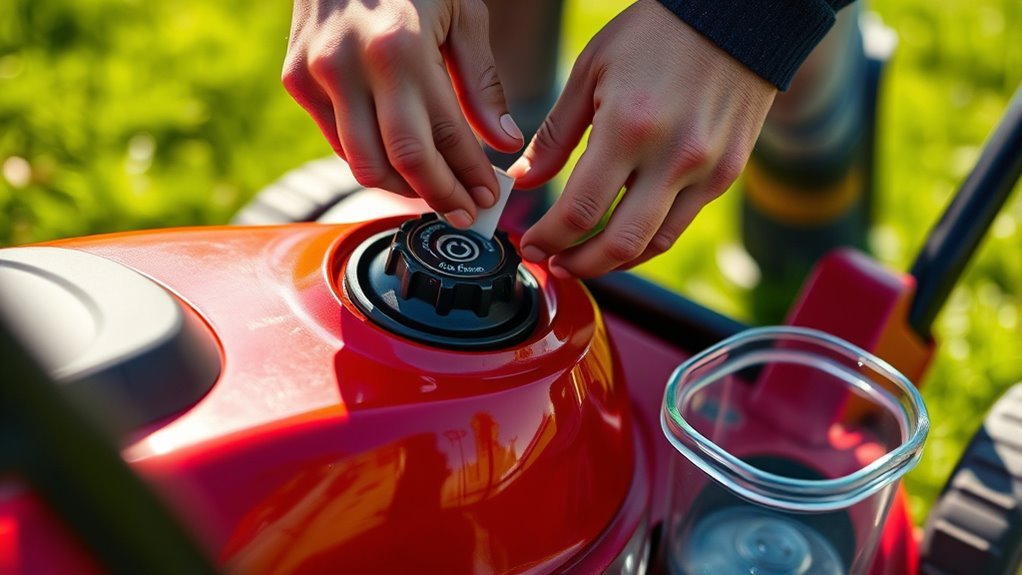
While preparing to drain gas from your lawn mower, gather all the necessary tools and safety equipment to make the process smooth and secure. Start by getting a clean, approved fuel container with a secure lid to safely catch the gasoline you’ll be draining.
Put on safety goggles and nitrile gloves to protect your eyes and skin from fuel spills and fumes. Have a siphon pump or flexible fuel line ready to easily remove the gas from the tank.
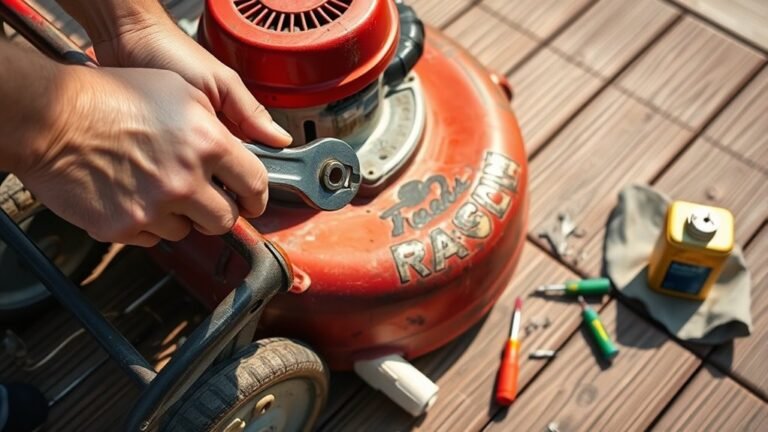
You may also need a flat-head screwdriver or pliers to loosen clamps or disconnect fuel lines, so keep those handy. Finally, prepare absorbent rags or paper towels to quickly clean any small spills during the process and maintain a safe work area.
Disconnect the Spark Plug Wire
Before you start draining gas, disconnect the spark plug wire to keep the engine from accidentally starting. Locate the spark plug, usually on the top or side of the engine, and pull the wire straight off.
Make sure the wire stays clear to prevent any electrical contact while you work. This little step helps keep things safe and avoids any surprises.
Safety Precautions First
Whenever you need to drain gas from your lawn mower, disconnect the spark plug wire first to prevent the engine from accidentally starting. This simple step is vital for your safety and guarantees the mower won’t turn on unexpectedly.
Before you begin, follow these safety precautions:
- Confirm the engine is completely off and cooled down.
- Wear safety glasses and gloves to protect against fuel spills and fumes.
- Carefully disconnect the spark plug wire from the spark plug.
- Keep the wire away from the spark plug to avoid accidental contact.
- Work in a well-ventilated area to reduce inhalation risks.
Taking these steps might seem simple, but trust me, they make all the difference when it comes to staying safe.
Prevent Accidental Starts
How do you keep your lawn mower from starting unexpectedly when draining gas? The key is to disconnect the spark plug wire before you begin. This simple step prevents the engine from running accidentally, eliminating the risk of electrical sparks igniting gasoline fumes.
Gently pull the spark plug boot or cap from the spark plug, taking care not to damage the wire. Once the spark plug wire is disconnected, you can safely disconnect the fuel line and drain the fuel without worrying about the engine starting.
Remember to reconnect the spark plug wire only after you’ve completed all fuel removal steps and ensured everything is safe. This precaution keeps you protected while working on your mower’s fuel system.
Choose Your Preferred Fuel Drainage Method
Since lawn mowers vary in design, you’ll need to pick the fuel drainage method that best fits your model and guarantees safety. How you drain fuel from the gas tank depends on your mower’s accessibility and whether it uses a small engine fuel system.
Consider these methods:
- Using a siphon or transfer pump for efficient fuel removal
- Disconnecting the fuel line at the carburetor or filter for gravity drainage
- Running the engine until it stalls to push out residual fuel
- Employing specialized hand vacuum pumps or drain kits designed for small engines
- Choosing a method that minimizes spills and ensures safe handling
Picking the right approach helps you effectively drain fuel while protecting your mower and yourself. It’s all about making the job easier and safer!
Drain Gas Using a Siphon Pump or Fuel Line Removal
Once you’ve chosen your preferred fuel drainage method, you can start by using a siphon pump or removing the fuel line to drain gas from your lawn mower. With a siphon pump, insert the intake hose deep into the fuel tank and pump fuel into an approved container, ensuring you catch every drop.
For fuel line removal, locate the rubber hose linking the tank to the carburetor, loosen the clamp, and carefully disconnect it. Position a stable container underneath to catch the draining gas.
Always make sure your mower is off, cooled, and on a level surface in a well-ventilated area before you drain gas. After draining, securely reattach the fuel line clamp and dispose of the gas according to local regulations to keep the environment safe.
Run the Engine Until It Stops to Clear Residual Fuel
Why let your lawn mower run until it stops? Running the engine until it stalls helps clear residual fuel from the carburetor and fuel lines, preventing clogs and damage.
Running your lawn mower until it stops clears leftover fuel, preventing clogs and protecting your engine.
Before you start, make sure to place the mower on a level surface and work in a well-ventilated area. Also, don’t forget to disconnect the spark plug for safety.
Start the engine and let it run at idle or low speed. Keep it going until the engine stalls on its own.
As the engine runs, it uses up the remaining fuel in the system. When it finally stalls, you’ll know most of the fuel is drained.
Wait a few minutes for the engine to cool before moving on. This step makes sure your mower is ready for storage or maintenance without fuel residue causing issues.
Properly Dispose of Drained Gas and Clean Up
Although draining your lawn mower’s gas is essential, you need to dispose of the fuel properly to protect the environment. Never pour old fuel into drains or onto the ground—it’s illegal and harmful.
Instead, take drained gasoline to authorized recycling centers or hazardous waste facilities. Store leftover fuel in approved, clearly labeled containers away from heat until disposal.
Clean up any spills immediately using absorbent materials. Dispose of contaminated materials following local regulations.
Afterward, thoroughly clean and dry your fuel containers and tools to prevent residue buildup or corrosion.
| Task | Best Practice |
|---|---|
| Fuel Disposal | Use authorized recycling centers |
| Spill Clean Up | Use absorbent materials promptly |
| Storage of Fuel | Store in approved, labeled containers |
Conclusion
Now that you’ve prepared your mower, gathered your tools, and disconnected the spark plug, you’re ready to drain the gas safely. Whether you siphon the fuel or remove the fuel line, remember to run the engine until it stops to clear every last drop.
Dispose of the gas properly, clean up your workspace, and enjoy peace of mind. You’ve taken control, you’ve worked smart, and you’ve protected your mower for seasons to come.
Draining gas from your lawn mower doesn’t have to be a hassle. By following these simple steps, you ensure your mower stays in top shape and ready for the next season. Proper fuel removal prevents gumming and engine damage, saving you time and money down the road. So go ahead, drain your gas confidently, knowing you’ve done the job right and extended your mower’s life.