
How to Start a Lawn Mower in 10 Easy Steps
To start your lawn mower easily and get your yard looking great, first check the fuel, oil, air filter, and spark plug. These are the basics to ensure your mower runs smoothly without any hiccups. If you find the gasoline is old or low, add fresh fuel to keep the engine happy.
Next, prime the engine by pressing the primer bulb 3–5 times. This helps get the fuel flowing properly.
For a cold start, set the choke fully. Then, pull the starter cord smoothly until the engine ignites.
As the engine warms up, gradually open the choke. Once it’s running steadily, adjust the throttle for smooth operation.
If your mower struggles to start or keep running, don’t worry—there are common issues you can troubleshoot. Keep following these simple steps to guarantee a smooth mowing experience every time.
Check Fuel and Oil Levels
Before you start your lawn mower, always check that the fuel tank has fresh, unleaded gasoline to avoid any starting problems. Stale or contaminated fuel can cause your engine to stall or fail to start, so replace old fuel promptly.
Always use fresh unleaded gasoline in your mower to prevent stalling and starting issues.
Next, check the fuel level to ensure you have enough for your mowing session. Don’t forget to inspect the oil too.
Use the dipstick to check that the oil level is within the recommended range and add more if needed. After topping up, make sure the oil cap is tightly secured to prevent leaks and contamination.
Regularly examining both fuel and oil keeps your mower running smoothly and extends its lifespan. It’s a simple step that really makes a difference!
Inspect the Air Filter and Spark Plug
After checking your fuel and oil, take a moment to inspect the air filter and spark plug. These parts are essential for your mower’s performance.
First, remove the air filter cover and pull out the air filter. Look for any dirt, debris, or clogging. If the filter looks grey, compacted, or dirty, clean it or replace it to ensure proper airflow.
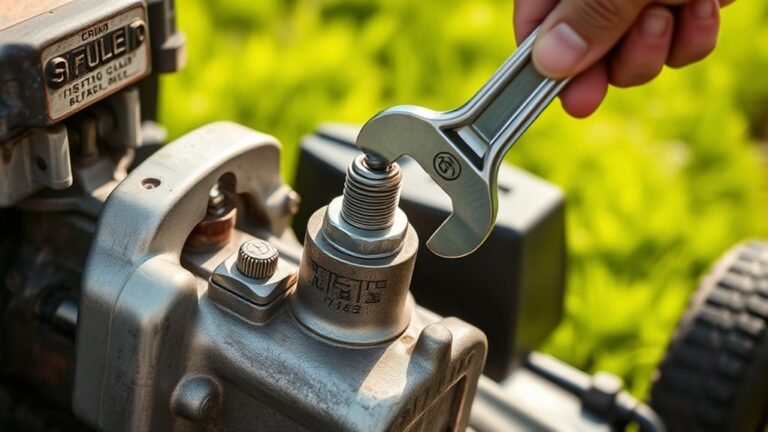
Next, disconnect the spark plug wire to prevent accidental starts. Then, use a spark plug wrench to remove the spark plug and check it for wear, fouling, or corrosion.
Don’t forget to check the spark plug gap with a feeler gauge. Adjust it according to your mower’s specifications before putting it back in.
Keeping the air filter and spark plug clean and in good shape helps your mower start smoothly every time. It’s a simple step that makes a big difference!
Add Fresh Gasoline if Needed
How long has it been since you last filled your mower’s tank? Using fresh gasoline is vital for a smooth start. If the fuel is old or contaminated, your engine might sputter or fail to start.
Always drain stale fuel and refill with fresh fuel before starting. Use unleaded gasoline with at least 87 octane for peak performance. Adding a fuel stabilizer helps keep gasoline fresh during storage longer than 30 days.
| Aspect | Recommendation |
|---|---|
| Fuel Type | Unleaded gasoline, 87 octane+ |
| Old Fuel | Drain before refilling |
| Storage | Use sealed, labeled containers |
| Fuel Stabilizer | Add if storing >30 days |
Refill your mower with quality fuel to guarantee reliable starts every time. It really makes a difference!
Prime the Engine Properly
To prime your lawn mower’s engine, press the primer bulb 3 to 5 times until it feels firm. This draws fuel into the carburetor.
Be careful not to over-prime. Too many presses can flood the engine and make starting harder.
Always check that fuel is flowing properly before pulling the starter cord. This way, you’ll avoid any surprises when you try to start it up.
Primer Bulb Usage
Why press the primer bulb before starting your lawn mower? The primer bulb draws fuel into the carburetor, making starting easier, especially when the engine is cold.
Here’s how to use it effectively:
- Press the primer bulb 3 to 5 times until it feels firm to ensure the carburetor fills with fuel.
- Engage the choke after priming to prepare the engine for starting.
- Pull the starter cord while the choke is on to ignite the fuel-air mixture smoothly.
Make sure the primer bulb isn’t cracked or leaking, or you might lose fuel and struggle to start the engine.
Avoid Over-Priming
Although pressing the primer bulb is essential for starting your lawn mower, you shouldn’t over-prime it. Over-priming can flood the carburetor with excess fuel, making the engine start difficult and possibly leading to stalling.
To prime the engine properly, press the priming bulb 3 to 5 times until it feels firm, but avoid pressing it too much. Only prime when the fuel tank is full and the engine is cold to guarantee maximum fuel absorption.
If your engine doesn’t start after several primes, give it a few minutes to let the excess fuel evaporate before trying again. Following the manufacturer’s guidelines on priming helps prevent flooding and ensures a smooth engine start every time.
Fuel Flow Check
Before you pull the starter cord, make sure you’ve pressed the primer bulb 3 to 5 times until it feels firm. This allows fresh fuel to reach the carburetor.
Proper priming guarantees smooth fuel flow and prevents starting issues. Before priming, check that your fuel tank contains fresh, clean gasoline. Also, confirm the fuel line is free from leaks or blockages.
Avoid over-priming, which can flood the engine.
Follow these steps to prime the engine properly:
- Verify the fuel tank has clean, fresh gasoline.
- Press the primer bulb 3 to 5 times until firm.
- Check the fuel line for leaks or blockages.
This careful fuel flow check will help your lawn mower start easily every time.
Set the Choke for a Cold Start
How do you guarantee your lawn mower starts smoothly on a cold morning? First, make sure the engine is cold, having sat unused overnight or for several hours. Move the choke lever to the full choke position to restrict air intake, which enriches the fuel mixture needed for a cold start.
If your mower has a primer bulb, press it 3-5 times to push fresh fuel into the engine. Using fresh fuel and checking oil levels beforehand also helps. Once primed, pull the starter cord steadily until the engine fires.
After it starts, gradually open the choke to allow the engine to run normally. Setting the choke correctly ensures your mower gets the right fuel-air mix, making cold starts reliable and hassle-free. It really makes a difference when the temperature drops!
Adjust the Throttle to the Correct Position
Before you start mowing, set the throttle lever to the right position to keep the engine running smoothly. Usually, you’ll want it on “Fast” or “Run” for maximum cutting power, but starting cold may require a slower setting.
Getting this right helps prevent stalling and guarantees consistent performance. It’s a small step that makes a big difference when you’re out on the lawn.
Throttle Settings Overview
Although it might seem simple, adjusting the throttle to the correct position is crucial for starting your lawn mower smoothly. Getting the throttle position right ensures the engine gets the right mix of air and fuel, making starting easier and preventing flooding.
Here’s what to remember when you adjust the throttle:
- Set the throttle to “fast” or “run” for most starts to provide enough fuel and air.
- For cold starts, try starting on “slow,” then switch to “fast” once the engine warm-up is complete.
- Avoid mid-range throttle settings during startup, but use them after starting to keep the mower running steadily.
Always refer to your mower’s manual for specific recommendations. And remember to adjust the throttle after the engine starts for peak performance.
Optimal Throttle Position
When you adjust the throttle to the medium or fast position, you give the engine the airflow it needs to start smoothly and quickly. For cold starts, set the throttle to “start” or “fast” to help the engine ignite faster.
Avoid positioning the throttle at “slow” or “idle” during startup, as this can make it harder for the engine to start. Once your engine is running steadily, gradually lower the throttle to a moderate speed for consistent mowing performance.
Proper throttle adjustment prevents the engine from stalling and ensures smooth operation. By setting the throttle correctly before you start, you make the whole process easier and protect your mower’s engine from unnecessary strain.
Pull the Starter Cord Smoothly
Since pulling the starter cord smoothly is key to getting your lawn mower running, you’ll want to use a quick, firm motion without jerking.
Pull the starter cord smoothly to avoid damaging the recoil spring or stalling the engine. Here’s how to do it right:
Pull the starter cord smoothly to protect the recoil spring and keep your engine running strong.
- Grip the starter cord handle firmly to maintain control throughout the pull.
- Use a quick, firm motion to pull the cord; avoid slow or jerky movements to prevent jerking that can harm the engine.
- Let the cord rewind slowly after each pull to protect the recoil mechanism from snapping.
If the engine sputters, pause a few seconds before pulling again. This helps prevent flooding.
Following these steps ensures your lawn mower starts efficiently every time.
Gradually Release the Choke as the Engine Warms
As the engine warms up, you’ll want to gradually open the choke to let the air-fuel mixture adjust for smooth running. After you start a gas engine, move the choke from fully closed to half open, then fully open within 30 seconds to 1 minute.
This avoids stalling or flooding and ensures proper engine operation. Watch the engine’s sound and RPM—once it runs smoothly without sputtering, fully release the choke.
| Choke Position | Time After Start | Engine Condition |
|---|---|---|
| Full Closed | 0 seconds | Engine just started |
| Half Open | 15-30 seconds | Engine warming up |
| Mostly Open | 30-45 seconds | Air-fuel mix normalizing |
| Fully Open | 45-60 seconds | Smooth, steady running |
Fine-Tune Throttle Settings for Steady Operation
Although you’ve warmed up the engine, you’ll want to set the throttle lever to the “fast” or “run” position to maintain a consistent speed. This helps keep the engine speed steady for smooth mowing.
Set the throttle to “fast” or “run” to keep engine speed steady for smooth mowing.
To fine-tune throttle settings for steady operation, follow these steps:
- Adjust the throttle before starting to ensure the engine reaches ideal RPM without over-revving.
- Once running, keep the throttle at a moderate level to prevent stalling or damaging the engine.
- Use the throttle control to respond quickly to changing conditions, maintaining steady engine performance.
Troubleshoot Common Starting Problems
If your mower won’t start, check the fuel and spark plug first—they’re often the main culprits. Make sure you’re using fresh gasoline and inspect the spark plug for wear or fouling.
Also, don’t forget to perform basic engine and safety checks to keep everything running smoothly. It’s a good habit that saves you headaches down the line.
Fuel and Spark Issues
When your lawn mower won’t start, fuel and spark issues often lie at the root of the problem. To get it running smoothly, check these key areas:
- Fuel quality: Always use fresh gasoline with at least 87 octane. Old gas or contaminated fuel can clog the carburetor, which makes ignition harder.
- Spark plug condition: Take a look at the spark plug for any wear or fouling. Cleaning or replacing it regularly helps ensure a strong spark that lights the fuel-air mix.
- Ignition components: Make sure the spark plug wires are snugly connected. Also, check the ignition coil because a weak or dead spark can stop your mower from starting.
Fixing these fuel and spark issues usually sorts out common starting problems pretty quickly and reliably. It’s often easier than you might think!
Engine and Safety Checks
Before you attempt to start your lawn mower, make sure the engine is properly prepared and all safety features are engaged. Check the oil level on the dipstick to confirm it’s within the recommended range for smooth engine performance.
Inspect the spark plug for wear or fouling to ensure reliable ignition. Verify the air filter is clean and free of debris to protect the engine.
Also, ensure the fuel is fresh and the fuel system is clear of blockages. Finally, confirm safety features like the blade brake and operator presence controls are functioning correctly to avoid accidents.
| Component | What to Check | Action if Problem Found |
|---|---|---|
| Oil Level | Within recommended range | Add or change oil |
| Spark Plug | Clean, no corrosion | Clean or replace |
| Air Filter | Free of dirt and debris | Clean or replace |
| Fuel | Fresh, no leaks or blockages | Refill or clear fuel system |
Conclusion
Starting your lawn mower is like waking a sleeping giant—each step, from checking fuel to pulling the starter cord, gently brings it to life. Just as a careful gardener tends to every seed, you prepare your mower with patience and precision.
Follow these steps, and soon you’ll hear the powerful roar of your mower ready to conquer the wild grass. Treat it well, and it’ll reward you with a smooth, effortless ride every time.
Remember, mastering how to start a lawn mower isn’t just about pulling a cord; it’s about preparing your machine with care. With these 10 easy steps, you’ll ensure your mower runs smoothly and efficiently every season. So, next time you’re ready to tackle the yard, just follow this simple guide, and enjoy a hassle-free start that makes lawn care a breeze.