
Where to Spray Starter Fluid on Lawn Mower in 10 Essential Steps
First, make certain your mower’s engine is off and cooled, then disconnect the spark plug wire for safety. This step is crucial to prevent any accidental starts while you’re working on the mower.
Next, locate and remove the air filter cover and air filter carefully. Doing this will expose the carburetor’s intake port, which is where you’ll spray the starter fluid.
Spray a quick burst of starter fluid directly into this intake. It only takes a moment, but this helps the engine catch and start more easily.
After that, reinstall the air filter and cover tightly. Engage the choke, then start the engine immediately to take advantage of the starter fluid’s effect.
Follow these steps for a smoother start, and you’ll find detailed guidance to guarantee you get it right every time. It really makes a difference when your mower is acting a little stubborn!
Ensure the Engine Is Turned off and Cooled
Before you spray starter fluid on your lawn mower, make sure the engine is completely turned off and cooled down. Always confirm the engine off status before proceeding to prevent any accidental starts.
Let the engine cool for at least 15 minutes after use; this is essential to avoid burns or fire hazards. Gently touch the engine surface to verify it’s a cool engine before spraying.
Avoid applying starter fluid to a hot or warm engine because vapors can ignite unexpectedly. Also, be mindful that residual heat from recent use can damage the engine or cause personal injury.
While you’re checking, keep in mind the spark plug remains connected at this stage, but you’ll handle that step separately to guarantee safety.
Disconnect the Spark Plug Wire for Safety
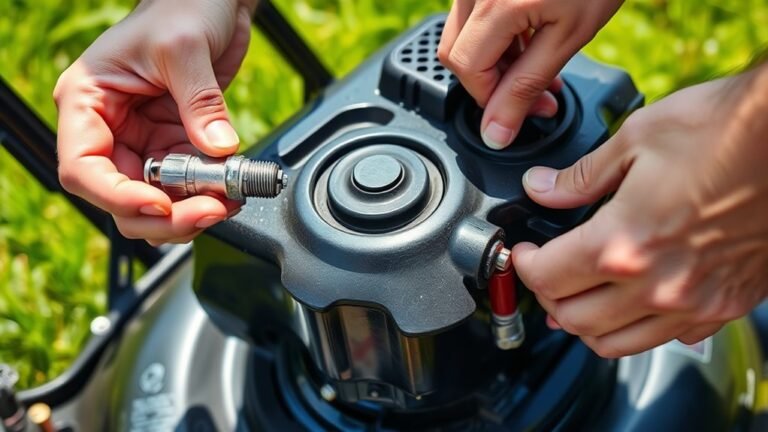
Since preventing accidental engine ignition is essential, you should always disconnect the spark plug wire before applying starter fluid. To do this safely, first locate the spark plug wire by tracing the thick wire from the ignition coil to the spark plug.
Gently pull the spark plug wire off the spark plug, holding it firmly to avoid damaging the wire or connector. Make sure the spark plug wire is fully disconnected to eliminate any risk of electrical sparks when you spray starting fluid. This safety step protects you from unexpected engine sparks during the application.
Once you’ve sprayed the starter fluid, remember to securely reattach the spark plug wire before attempting to start the lawn mower. This ensures proper engine function and keeps things safe.
Locate the Air Filter Cover on Your Lawn Mower
When you need to spray starter fluid, start by locating the air filter cover on your lawn mower. This cover is usually a small panel secured with screws, clips, or wing nuts on the side or top of the engine compartment.
Look near the carburetor, where the air filter is housed, since that’s where the air intake is positioned. Some models have a quick-release latch or snap-fit cover, so you may not need tools to open it.
Identifying the air filter cover correctly is essential because once removed, you’ll access the air filter and the carburetor’s air intake port. This is the exact spot where you’ll spray the starter fluid to help get your mower running smoothly.
Remove the Air Filter Cover Carefully
Although it may seem straightforward, you’ll want to remove the air filter cover carefully to avoid damaging any components. Use a screwdriver or the right tool to loosen the screws or clips securing the cover.
Gently lift the cover to expose the air filter and carburetor intake area without forcing anything. Before you spray, take note of how the cover and filter sit, so reassembly is easy.
Keep these tips in mind:
- Handle the air filter cover gently to prevent cracks or breaks
- Inspect the air filter for dirt or damage before proceeding
- Avoid dropping or misplacing small parts when removing the cover
- Remember the cover’s position for proper reinstallation after you spray starter fluid
Being cautious here ensures your mower stays in good shape and ready to start.
Take Out the Air Filter to Access the Carburetor
After carefully removing the air filter cover, the next step is to take out the air filter itself to reach the carburetor. Gently pull the air filter out, being careful not to damage it or other nearby parts.
Once removed, inspect the air filter for dirt or clogs—clean or replace it if needed before moving on. With the air filter out, you now have clear access to the carburetor beneath its housing.
This is important because you’ll spray the starting fluid directly into the carburetor’s opening through the air intake port. Removing the air filter ensures the starting fluid can enter unobstructed, helping your lawn mower start more easily when the engine is stubborn or cold.
Identify the Carburetor or Air Intake Port
First, locate the carburetor on the side of your mower’s engine near the air filter housing.
Remove the air filter cover and take out the filter to access the air intake port.
This opening is where you’ll spray the starter fluid to help your mower start.
It’s pretty straightforward once you find the air filter. Just make sure you have your spray ready!
Locate Mower Carburetor
When you need to spray starter fluid on your lawn mower, you’ll want to locate the carburetor. It’s usually found on the side of the engine beneath the air filter cover.
To find it easily, follow these steps:
- Remove the air filter cover carefully.
- Take out the air filter to expose the carburetor.
You’ll notice the carburetor has a small bowl and throat where air and fuel mix.
Look for the air intake port connected to the carburetor; it’s a small tube or opening where you can spray the starter fluid.
Access Air Intake Port
To access the air intake port, start by removing the air filter cover on your mower’s engine. This will reveal the carburetor.
The carburetor is usually located near the air filter housing and has fuel lines and linkages attached. The air intake port is a small opening or tube connected to the carburetor.
Before you proceed, make sure the engine is cool to avoid burns. Also, clear any debris around the air intake port to guarantee proper spray placement of the starter fluid.
| Component | Location | Notes |
|---|---|---|
| Air Filter Cover | Side of engine | Remove to expose carburetor |
| Carburetor Body | Near air filter | Has fuel lines attached |
| Air Intake Port | Connected to carburetor | Small opening for spray placement |
Remove Air Filter
Although the air filter cover is already removed, you’ll need to carefully take out the air filter itself to expose the carburetor or air intake port. This step is essential because the intake opening, where you’ll spray the starter fluid, is hidden beneath the air filter.
Here’s how to proceed:
- Make sure the engine is cool to avoid injury.
- Locate the air filter attached to the side of the engine.
- Gently detach the air filter to reveal the carburetor’s intake opening.
- Identify the small intake port or tube where air flows into the carburetor.
Spray a Small Amount of Starter Fluid Into the Intake
Since your lawn mower won’t start, you’ll need to spray a small amount of starter fluid directly into the carburetor or air intake. First, locate the carburetor or air intake, which is usually near the air filter housing.
Remove the air filter cover and take out the air filter. This will give you clear access to the intake port.
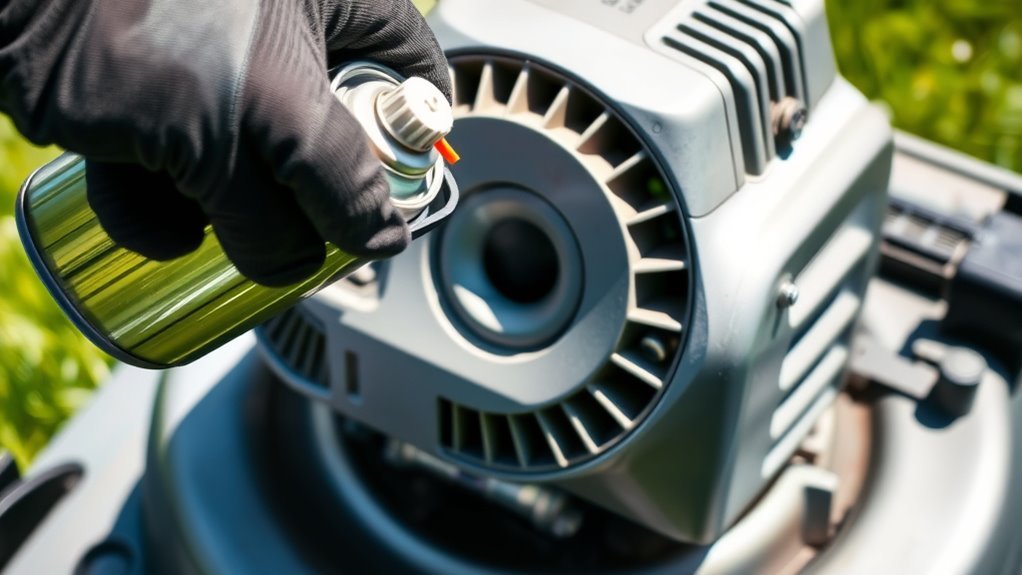
Hold the starter fluid can a few inches away and spray a quick, controlled burst lasting about one second into the opening. Be careful not to use too much fluid, as over-applying can flood the engine or cause damage.
This targeted spray helps deliver the fuel needed to ignite the engine and get it running smoothly again. Just a little bit goes a long way!
Reinstall the Air Filter and Cover Securely
After spraying starter fluid, make certain you properly align the air filter before putting the cover back on. Secure the cover fasteners tightly to prevent any air leaks.
This step helps keep debris out and ensures your mower starts smoothly. It’s a small thing, but it really makes a difference!
Proper Filter Alignment
When you spray starter fluid into the carburetor’s air intake, you’ll want to promptly reinstall the air filter and cover to keep debris out of the engine. Proper filter alignment is vital to prevent air leaks that can affect your mower’s startup efficiency.
Here’s how to ensure it’s done right:
- Check that the air filter is clean and undamaged before placing it back.
- Align the air filter properly within its housing to avoid gaps.
- Secure the cover firmly, ensuring no space for unfiltered air to enter.
- Double-check the filter and cover fit to maintain maximum airflow and engine protection.
Following these steps helps your mower run smoother and protects it from harmful debris after using starter fluid. It’s a quick step that really makes a difference!
Securing Cover Fasteners
Two key steps guarantee your mower’s air filter cover stays secure: properly seating the filter and tightening all fasteners snugly. First, make sure the air filter is correctly positioned to create a tight seal.
Next, align the air filter cover properly over the filter and intake area. Then, reinstall all screws or clips that hold the cover in place. Tighten these fasteners securely, but avoid overtightening, which can damage threads or warp the cover.
Securing the air filter cover properly prevents debris from entering the engine and ensures no air or starter fluid leaks during startup. Taking these steps helps maintain your mower’s performance and protects its internal components from damage.
Always double-check that the fasteners are secure before operating the mower.
Engage the Choke for Easier Starting
Because the choke lever restricts airflow and enriches the fuel mixture, you’ll find it much easier to start your lawn mower by engaging the choke fully before pulling the starter cord.
When using starting fluid, this step guarantees the engine gets the right fuel-air balance to ignite quickly. Here’s what to keep in mind:
- Locate the choke control, often marked or colored for easy spotting.
- Move the choke to the “on” or “closed” position before spraying starting fluid.
- Only use the choke during the initial engine startup; don’t forget to switch it off gradually once the engine runs smoothly.
- Always follow your mower’s specific instructions for choke use to avoid damaging the engine.
Using the choke correctly alongside starting fluid helps your engine fire up efficiently every time.
It’s a simple step that makes a big difference, so don’t skip it!
Attempt to Start the Lawn Mower Immediately After Spraying
Although it may seem tempting to wait, you should start your lawn mower immediately after spraying starter fluid to guarantee the fuel reaches the engine before it evaporates. Right after spraying, pull the starter cord or engage the electric starter without delay.
Keep a firm grip and steady pull to give the volatile starter fluid the best chance to ignite. If the engine sputters or starts briefly, keep it running or proceed with normal operation.
Maintain a firm, steady pull to ignite starter fluid and keep the engine running if it sputters or starts briefly.
Avoid prolonged cranking; if the engine doesn’t start within a few seconds, stop to prevent flooding or damage. Wait a few minutes before trying again.
Acting quickly ensures the starter fluid effectively helps your mower overcome starting issues and gets the engine running smoothly.
Conclusion
Think of your lawn mower as a trusty steed ready to charge into the green battlefield. Spraying starter fluid is like giving that steed a quick sip of energy before the race.
By following these steps carefully, you’re ensuring your mower wakes up strong and enthusiastic. Just like a rider preparing their horse, your careful touch sets the stage for a smooth start and a victorious mowing experience every time.
When you spray starter fluid on your lawn mower, focus on the carburetor or air intake area. This helps the engine ignite quickly, especially if it’s been sitting idle for a while. Remember, a little goes a long way—too much starter fluid can flood the engine.
In short, knowing where to spray starter fluid on a lawn mower is key to a reliable start. Follow the essential steps, spray it correctly, and your mower will fire up easily. That way, you can enjoy a hassle-free mowing session and keep your lawn looking sharp all season long.