
How to Tell If Lawn Mower Blades Are Reverse Threaded
To tell if your lawn mower blades are reverse threaded, start by checking the bolt head for markings like “LH,” which stands for left-hand threads. This little clue can save you a lot of frustration.
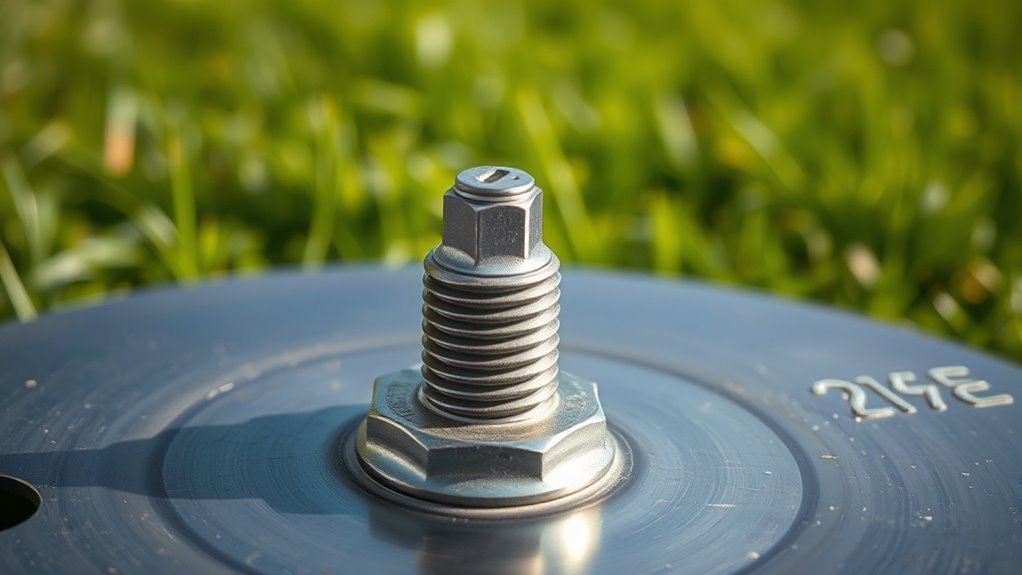
You can also take a closer look at the threads themselves. Standard right-hand threads spiral upward away from the blade, while reverse threads spiral the opposite way.
Here’s a quick trick: try turning the bolt counterclockwise. If it tightens instead of loosening, that’s a clear sign it’s reverse threaded.
Still unsure? No worries—your mower’s manual is the best place to get absolute certainty. Keep reading to discover more tips on safely handling and removing these bolts without any hassle.
Identifying Thread Direction on Lawn Mower Blades
When you need to identify thread direction on your lawn mower blades, start by examining the bolt and threads closely. Use visual inspection to check the threads: standard right-hand threads typically spiral upward away from the bolt head.
Next, try turning the bolt counterclockwise to see if it loosens; if it does, you’re dealing with right-hand threading. However, if the bolt resists or only loosens when turned clockwise, it’s likely reverse threaded.
Look for markings like “LH” on the bolt head, which indicate left-hand threads. Finally, consult your mower’s manual to confirm the thread direction for your specific blade and bolt.
This step ensures you avoid damaging threads or blades during removal or installation. It’s always better to double-check than risk causing a problem!
Tools and Techniques for Safely Removing Blade Bolts
Although removing lawn mower blade bolts can be challenging, using the right tools and techniques makes the process much safer and easier. First, disconnect the spark plug to prevent accidental starts.
To loosen the bolt, apply penetrating oil to the blade bolt thread and let it sit for 15-30 minutes. Secure the blade using a wooden block or blade holding tool to prevent rotation.
Use a socket wrench or impact wrench for better leverage—an impact wrench with about 1600 pounds of torque works well on stubborn bolts. When you turn the bolt, pay attention to the direction; this helps you determine the thread direction—whether it’s a right-hand thread or left-hand thread.
Always check the thread before removal to avoid damage. It’s a small step that can save you a lot of trouble later on!
Conclusion
Now that you know how to navigate the nuances of lawn mower blade threads, you can confidently conquer any cutting challenge. By carefully checking thread direction and using the right tools, you’ll swiftly and safely secure or remove blade bolts without stress.
Remember, mastering these methods makes maintenance more manageable and your mower more mighty. Stay sharp, stay safe, and keep your cutting craft crisp with these clever, careful techniques!
Understanding how to tell if lawn mower blades are reverse threaded is key to proper blade maintenance. This knowledge helps prevent damage and ensures your mower runs smoothly. So, next time you need to change or tighten your blades, you’ll know exactly what to do for safe and effective lawn mower blade care.