
How to Change Lawn Mower Oil in 5 Easy Steps
You’ll want to change your lawn mower oil every 50 hours of use or at least once a year to keep your mower running smoothly. Regular oil changes help prevent engine wear and ensure your mower performs at its best.
Before you start, make sure you have the right type and amount of oil for your specific mower model.
First, check the oil level with the dipstick when the engine is cold. This gives you an accurate reading.
Next, disconnect the spark plug to prevent accidental starting, then warm the engine briefly to make the oil flow easier.
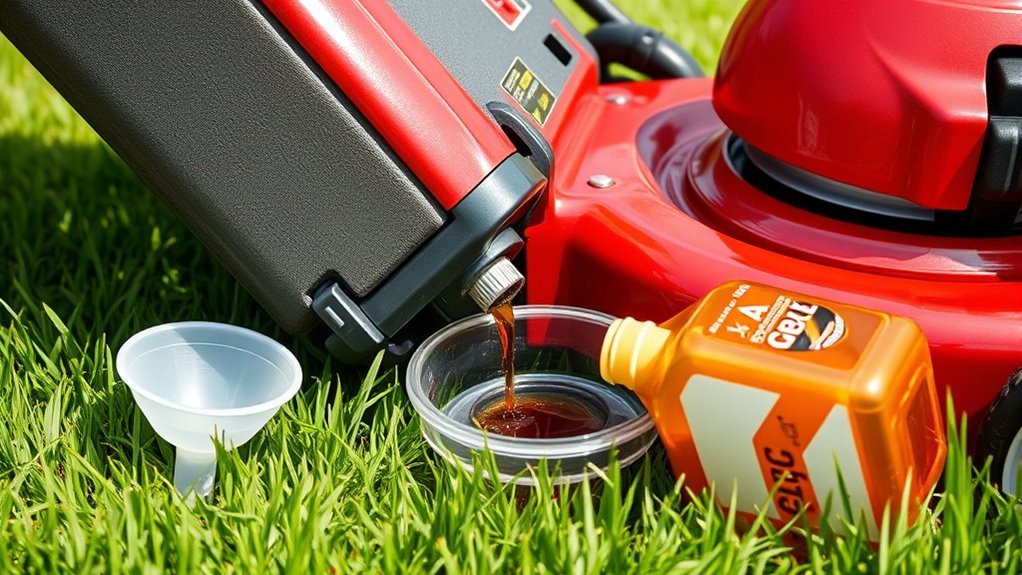
Tilt the mower carefully to drain the old oil into a container. Once drained, reinstall the spark plug.
Now, refill with the correct oil, check the level again to avoid overfilling, and secure the oil cap tightly.
Finally, run the engine for a few minutes to circulate the fresh oil and check for any leaks.
Keep reading for helpful tips that will make your oil change process quick and hassle-free!
When to Change Lawn Mower Oil
Although most lawn mower manufacturers recommend changing the oil once a year or every 50 hours of use, you should adjust this schedule based on how often and under what conditions you mow.
Adjust oil change intervals for your lawn mower based on mowing frequency and conditions.
For new mowers, an early oil change after the initial five hours helps clear break-in debris. If you mow in tough conditions like wet grass or high heat, consider more frequent oil changes as part of your engine maintenance.
Seasonal scheduled service often means changing the oil before winter storage or at the season’s start. Regularly check oil level and quality through the oil cap to decide if your oil in mower needs changing sooner.
Properly drain oil to keep the oil in lawn mower fresh, ensuring your small engine runs smoothly and lasts longer.
How to Check the Oil Level
Before you check the oil level, make sure the engine is cold to get an accurate reading. Start by removing the oil fill cap and pulling out the dipstick.
Wipe the dipstick clean with a rag to remove old engine oil, then fully insert it back into its tube. Pull it out again to measure the current oil level.
Look closely at the level indicator on the dipstick—it should fall between the two designated marks or holes, showing the proper level. If the oil level is below the acceptable range, add engine oil gradually through the fill hole.
After each addition, reinsert the dipstick and check the level again to avoid overfilling. Keeping the oil at the proper level ensures your mower runs smoothly and lasts longer.
Preparing the Mower for an Oil Change
Since changing your lawn mower’s oil involves working near moving parts and hot surfaces, start by disconnecting the spark plug wire to prevent accidental starts.
With the spark plug wire safely disconnected, remove any debris or grass buildup around the engine surface to keep dirt out during maintenance.
Next, warm up the engine for about 15 minutes to loosen the oil, making it easier to drain later. After warming up, turn off the engine and let it cool slightly.
To access the oil drain plug and oil cap safely, tilt the mower on its side with the air filter facing up. This position prevents oil from flooding the air filter and guarantees a smooth oil drain without mess or damage.
Draining and Replacing the Oil
Once you’ve warmed up the engine and positioned the mower correctly, you can begin draining the old oil into a suitable container to guarantee a clean and efficient oil change. Start by turning off the mower and disconnecting the spark plug wire.
Warm up the engine, position the mower, then turn it off and disconnect the spark plug wire before draining oil.
Remove the oil fill cap to loosen oil flow. Next, tilt the mower on its side with the air filter facing up. You can drain oil either through the drain plug or use an oil extractor for old oil removal.
If you use the drain plug, make sure to securely reinstall it afterward. Pour new oil slowly, checking the level with the dipstick during the oil change process.
Finally, collect all used oil in an oil container and follow proper oil disposal guidelines to protect the environment.
Final Steps After Changing the Oil
After you’ve poured in the new oil and securely tightened the fill cap, check the dipstick to make sure the level is just right. Next, reinstall the oil cap and tighten it firmly to secure the oil fill.
Wipe down the engine and surrounding areas to clean up any spills. It’s a good idea to keep the engine area nice and tidy.
Dispose of the used oil responsibly at recycling centers to protect the environment. Finally, run the engine for a few minutes to verify circulation and check for leaks.
| Step | Action |
|---|---|
| Check oil level | Use dipstick to confirm correct oil |
| Reinstall oil cap | Place and tighten cap securely |
| Wipe engine | Clean spills and dirt from engine |
| Dispose used oil | Take to designated recycling points |
| Run engine | Verify circulation and check leaks |
Conclusion
Changing your lawn mower oil is simple and smart. By staying steady with scheduled swaps, you’ll sustain smooth, strong mower performance.
Remember to routinely review the oil level, ready your mower right, and responsibly replace the residue. With these five fast, foolproof steps, you’ll foster a flourishing, flawless lawn care routine.
Keep your mower moving with maintenance mastery and make mowing moments more manageable and more memorable! Regular oil changes help your lawn mower run efficiently and extend its lifespan. So, stick to this easy routine and enjoy a healthy, well-maintained lawn all season long.