
How Does a Self-Propelled Lawn Mower Work?
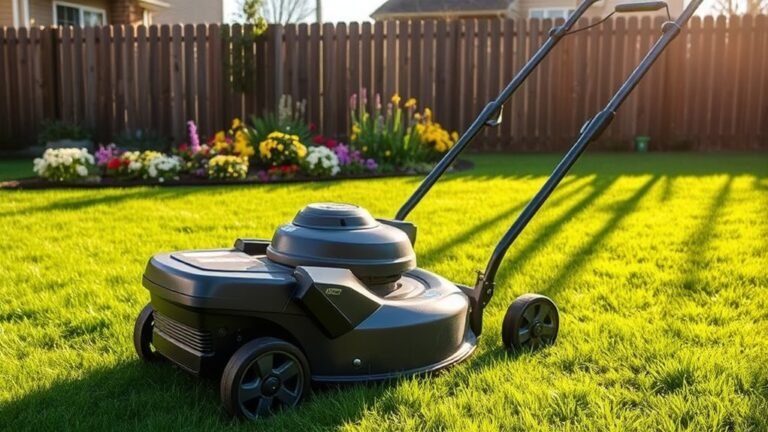
You’ll find a self-propelled lawn mower uses its engine or motor to power both the cutting blades and the wheels. This means it moves forward on its own when you engage the drive lever.
This handy system helps you mow without pushing, cutting down on fatigue and making your job way easier.
Depending on the mower model, power can be sent to the front, rear, or even all wheels.
This setup helps tackle different terrains and improves traction so you don’t get stuck or slip.
Keep going to explore how these drive systems work and why they make mowing so much less work.
Mechanism Behind Self-Propelled Lawn Mowers
Although self-propelled lawn mowers look like regular mowers, they use an internal combustion engine or electric motor to power both the cutting blade and the drive wheels, so you don’t have to push them. When you engage the drive lever, the mower’s drive system transfers power from the engine or motor to the wheels, initiating wheel movement.
Gas models use a pulley and belt system to connect the engine to the wheels, while electric models usually have dedicated motors driving the wheels directly. This power transfer overcomes the mower’s weight and terrain resistance.
Many mowers offer variable speed options, letting you match the drive configurations to your walking pace and lawn conditions. It makes mowing more efficient and a lot less tiring.
Types of Drive Systems and Their Functions
Once you engage the drive system on a self-propelled mower, the way power reaches the wheels depends on the type of drive system it uses. This propulsion happens through a transmission connected by belts, shafts, or direct drive mechanisms.
You’ll find three main drive system types, each affecting traction and maneuverability differently:
- Front-wheel drive: Power transfers to the front wheels, enhancing steering control on flat terrain.
- Rear-wheel drive: Uses the transmission to power rear wheels via belts or shafts, offering better traction on slopes.
- All-wheel drive: Distributes power to all wheels for maximum traction on uneven or slippery surfaces.
- Variable speed control: Lets you adjust forward speed through handlebar controls for comfortable mowing.
Understanding these options helps you choose the right mower for your yard’s conditions. It’s all about matching the mower’s capabilities to your lawn’s needs.
Conclusion
Now that you know how a self-propelled lawn mower works, you’ll appreciate its ease even more. Did you know these mowers can reduce your mowing effort by up to 50%? That means you spend half the time pushing and more time enjoying your yard.
With their smart drive systems doing the heavy lifting, you’ll breeze through lawn care like a pro. The mower adjusts its speed to match your pace, making it super easy to control. So, next time you mow, let the mower do the work!
Using a self-propelled lawn mower not only saves energy but also makes maintaining your lawn less of a chore. It’s perfect for larger yards or uneven terrain where pushing a mower can get tiring. Embrace the convenience of a self-propelled lawn mower and enjoy a healthier, well-kept lawn with less effort every time you mow.